Our Short List of 3
All 4 Picks at a Glance
| Product | Specs | Action |
|---|---|---|
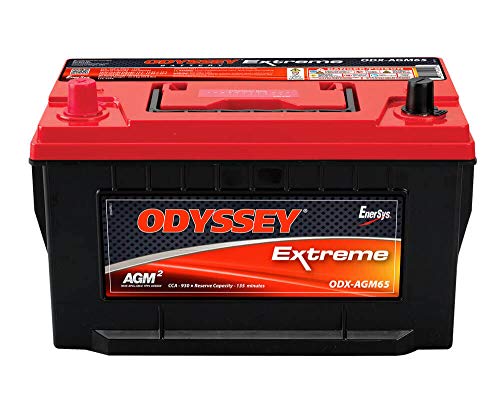 Odyssey ODX-AGM65 Extreme Series AGM Battery | Check price on Amazon | |
 ACDelco Gold 65AGMHRC AGM Battery | Check price on Amazon | |
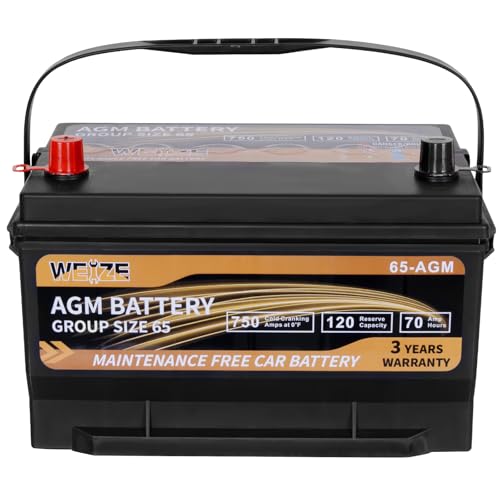 Weize Platinum AGM Battery BCI Group 65 | Check price on Amazon | |
 Optima RedTop 34/78 Starting Battery | Check price on Amazon |
Key takeaways
- Find the best battery for 2010 F150 trucks. Compare Group 65 AGM picks with strong cold cranking, reserve capacity, and fitment tips for your V8.
A dead battery in a 2010 Ford F-150 rarely gives much warning: one cold morning the starter turns slowly, the dash lights dim, and a truck that has served for over a decade refuses to cooperate. The 2010 F-150, sold with a 4.6 liter V8 or a 5.4 liter V8, was built around a Group 65 battery. The tray, cables, and hold-down clamp were all designed for that wide case.
The good news is that the 2010 F-150 is an electrically simple truck, with no start-stop system and no battery sensor demanding a specific chemistry. A wide range of strong Group 65 batteries will work, from sealed AGM units built for cold mornings to value-priced AGM replacements for daily driving.
As an Amazon Associate, we earn from qualifying purchases.
Quick Answer
The 2010 Ford F-150 takes a Group 65 battery, and the strongest pick is the Odyssey ODX-AGM65, a sealed AGM unit with 950 cold cranking amps and 145 minutes of reserve capacity. The ACDelco Gold 65AGMHRC is the solid mid-range choice at 775 cold cranking amps. Budget buyers should look at the Weize Platinum Group 65, while the Optima RedTop 34/78 suits drivers who accept a smaller case.
How to Choose
Start with the group size. The 2010 F-150 tray is sized for a Group 65 battery, roughly 12 inches long, 7.5 inches wide, and 7.5 inches tall, with the positive terminal on the left and the negative on the right as installed. A Group 65 battery drops in, lines up with the factory cables, and accepts the factory hold-down without modification. A different group size can still work, but measure the tray, cable reach, and clamp first.
Cold cranking amps, or CCA, is the next number to weigh. CCA is the current a battery can deliver at zero degrees Fahrenheit for 30 seconds while holding a usable voltage. The factory battery was rated around 650 to 750 CCA, so anything in that range or above will start the truck. Owners in northern states should aim higher, because an aging starter draws more current and cold oil resists turning. A 750 CCA battery will start a healthy V8 in most conditions, but a 950 CCA unit leaves a much wider margin when the starter is worn and the temperature is far below freezing.
Reserve capacity is the figure most buyers overlook, and it is the one that matters when something goes wrong. It is measured in minutes, and it describes how long a fully charged battery can deliver 25 amps before its voltage falls too low to be useful. A higher reserve capacity means the truck can sit with the lights on or run accessories with the engine off for longer, so for a work truck that powers a trailer or a light bar, it deserves as much attention as CCA. Look for 120 minutes or more.
Battery chemistry is the third decision. The 2010 F-150 shipped with a conventional flooded battery, but absorbed glass mat, or AGM, batteries are a direct replacement with real advantages. In an AGM battery the electrolyte is held in glass fiber mats, so there is no liquid to spill, no water to top up, and far better vibration resistance. AGM batteries also recharge faster and hold a charge longer in storage, which matters for trucks that sit between uses. The drawbacks are cost and sensitivity to overcharging, so fix a failing charging system before installing an AGM battery. Terminal layout deserves a look too: the truck uses standard SAE top posts with the positive terminal on the left as installed, so reversed terminals would force the cables to stretch or cross. A Group 65 AGM weighs 45 to 55 pounds, and a built-in handle makes it easier to lift from a deep tray.
Warranty coverage varies across brands. Most AGM batteries in this class carry a 36-month free replacement warranty, while premium pure-lead AGM units stretch to 48 months. Read the warranty terms on the listing, and keep the receipt for any future claim. Finally, match the battery to the duty cycle: a daily driver needs a reliable mid-range AGM, a towing truck benefits from the highest CCA and reserve available, and a truck that sits for weeks needs low self-discharge plus a maintainer.
Odyssey ODX-AGM65 Extreme Series AGM Battery
The Odyssey ODX-AGM65, sold under the older model name 65-PC1750T, is the strongest Group 65 battery in this guide and the one to buy when cold starting and reserve power matter most. It is a pure-lead AGM battery, which means its plates are made from 99.99 percent pure lead rather than a lead alloy. Pure lead allows thinner plates, and thinner plates mean more plate surface area inside the same case, which translates directly into higher cranking power and faster recharging. The listed 950 cold cranking amps is the highest in this guide by a wide margin, and the 145 minutes of reserve capacity gives the truck a generous cushion when accessories run with the engine off.
The ODX-AGM65 is built for trucks that work hard. Its sealed AGM construction resists vibration far better than a flooded battery, which matters on rough roads and job sites, and it recharges quickly after a deep discharge, tolerating hundreds of cycles without the rapid capacity loss that kills conventional batteries. Cold weather is where it earns its keep: the thin-plate pure-lead design delivers strong voltage under load at low temperatures, so the starter spins faster on a freezing morning. It also carries a 48-month warranty, the longest in this guide. The trade-offs are 54 pounds of weight and a premium position in the range.
Who Should Skip It
Skip the Odyssey ODX-AGM65 if the truck is a fair-weather daily driver with a healthy starter and no extra electrical loads. The premium cranking power and deep-cycle tolerance would go largely unused, and a mid-range AGM would serve just as well. Drivers who struggle to lift heavy batteries should also think twice, because at 54 pounds it is one of the heavier units in this class.
ACDelco Gold 65AGMHRC AGM Battery
The ACDelco Gold 65AGMHRC is the sensible middle of this guide, a high-reserve AGM battery that covers the 2010 F-150’s needs without the premium construction of the Odyssey. ACDelco is a long-established original equipment supplier, and the Gold line is its premium aftermarket range, built to meet original fit, form, and function specifications. The 65AGMHRC carries a 36-month free replacement warranty and is listed at 775 cold cranking amps with 150 minutes of reserve capacity, which is more reserve than the Odyssey despite the lower cranking figure. That balance makes it a strong choice for trucks that run accessories or sit with the ignition on while the engine is off.
The high-reserve design is the defining feature here. Reserve capacity of 150 minutes means the battery can sustain accessory loads for longer than most Group 65 batteries in its class, which helps when the truck powers a trailer or lights at a job site. The AGM construction keeps the electrolyte sealed in glass mats, so there are no spills, no water to add, and better vibration resistance than a flooded battery. Fitment is straightforward: the case measures 11.8 by 7.5 by 7.4 inches and weighs 45.8 pounds, making it one of the lighter AGM options in this guide and an easy drop into the tray. The main limitation is cranking power, since 775 cold cranking amps clears the factory requirement but does not match the Odyssey in deep winter or with a tired starter.
Who Should Skip It
Skip the ACDelco Gold 65AGMHRC if the truck lives in a region with long, hard winters and the starter already turns slowly on cold mornings. The 775 cold cranking amps is adequate, but the Odyssey offers a much wider margin for those conditions. Owners who need maximum deep-cycle endurance for a winch or a large inverter should also look at a higher-capacity option.
Weize Platinum AGM Battery BCI Group 65
The Weize Platinum AGM Group 65 is the value pick in this guide, a straightforward AGM battery that covers the essentials at a lower outlay than the premium brands. It is listed at 750 cold cranking amps with 70 amp-hours of capacity and 120 minutes of reserve capacity, which meets the 2010 F-150’s factory requirements with a modest margin. The case measures 12.05 by 7.56 by 7.56 inches with tapered terminals, positive on the left and negative on the right, matching the factory layout of the truck. A 36-month warranty backs the battery, putting its coverage on par with the ACDelco.
The appeal here is honest value. The Weize delivers the core benefits of AGM construction, including a sealed spill-resistant design, low self-discharge during storage, and better vibration resistance than a flooded battery, without the premium materials that push the Odyssey into a higher tier. For a daily driver in a mild climate, those benefits are enough. The battery is a starting battery by design, and the listing is clear that it should not be used in deep-cycle roles such as solar storage or marine house-bank service. The compromises are visible in the numbers: at 750 cold cranking amps and 120 minutes of reserve, it trails every other battery in this guide. Weize is also a newer value brand without the decades-long track record of the others, so long-term durability is less proven.
Who Should Skip It
Skip the Weize Platinum Group 65 if the truck faces harsh winters, tows heavy loads, or runs a winch and extra lighting. Its 750 cold cranking amps and 120 minutes of reserve are the lowest in this guide, and those margins matter under load. Owners who want a battery with a long proven track record should also step up to one of the established brands above.
Optima RedTop 34/78 Starting Battery
The Optima RedTop 34/78 is the wildcard in this guide, and it earns its place through a genuinely different design rather than a bigger specification sheet. Instead of flat plates, the RedTop uses spiral-wound cells, with two pure lead plates coiled into a tight spiral and separated by a glass mat. That SpiralCell design makes the battery extremely resistant to vibration, able to mount in almost any position, and quick to deliver a strong burst of cranking current. It is listed at 800 cold cranking amps with 100 minutes of reserve capacity and 50 amp-hours, and it carries a 36-month warranty for non-commercial use.
The RedTop has been a favorite among truck owners for years. The spiral-cell construction shrugs off the vibration and shock that kill conventional batteries on rough roads, and the sealed AGM design means no spills and no maintenance. At 38.8 pounds it is far lighter than any Group 65 battery in this guide, which makes installation noticeably easier. The dual terminals, with both SAE top posts and GM-style side terminals, give flexibility for accessory connections. Fitment is the catch: the RedTop 34/78 is a Group 34/78 battery, not a Group 65, and its case measures 10.02 by 6.89 by 7.84 inches, about two inches shorter than the Group 65 tray. The factory hold-down clamp will not fit the same way, so the battery may need an adapter tray or a modified clamp, and cable reach must be checked. Many F-150 owners run this battery happily, but it requires a physical fitment check rather than a simple drop-in replacement. The other limitation is capacity: at 50 amp-hours and 100 minutes of reserve, it holds less energy than any Group 65 battery here, so it is a poor choice for trucks that run accessories with the engine off.
Who Should Skip It
Skip the Optima RedTop 34/78 if a direct drop-in replacement is the priority, because it is not a Group 65 battery and the hold-down and cable fit must be checked and possibly adapted. Skip it as well if the truck runs accessories with the engine off, since its 50 amp-hour capacity and 100 minutes of reserve are the lowest in this guide. Owners who want the simplest possible swap should choose one of the Group 65 options above.
Who Should Skip It
Not every 2010 F-150 needs a new battery right now, and not every owner needs an AGM upgrade. If the current battery is less than three years old, holds a charge, and starts the truck briskly in cold weather, the money is better spent elsewhere until the first signs of weakness appear. A slow crank on a cold morning, dimming headlights at idle, or a battery that needs frequent jump starts are the real signals that replacement time has arrived.
An AGM battery is also the wrong upgrade for a truck with a failing charging system. A worn alternator, a slipping belt, or a voltage regulator that overcharges will kill an AGM battery faster than a flooded one. Fix the charging system first, confirm the voltage at the terminals with the engine running, and only then install a new battery. The same logic applies to parasitic drains: a stuck relay or an accessory that draws current with the truck off will drain any battery, and no amount of reserve capacity fixes a drain that should be repaired.
FAQ
What group size battery does a 2010 Ford F-150 take?
The 2010 Ford F-150 takes a Group 65 battery with top posts for both the 4.6 liter V8 and the 5.4 liter V8. The Group 65 case measures roughly 12 inches long, 7.5 inches wide, and 7.5 inches tall, with the positive terminal on the left and the negative on the right as installed. Always confirm the group size in the owner’s manual or by measuring the old battery.
How many cold cranking amps do I need for a 2010 F-150?
The factory battery was rated around 650 to 750 cold cranking amps, so that range is the practical minimum. A battery rated at 750 CCA will start a healthy truck in most conditions, while 800 CCA or more gives a useful margin for cold mornings and aging starters. Owners in northern states should aim for the highest CCA they can fit.
Is an AGM battery better than a flooded battery for a 2010 F-150?
An AGM battery is a direct replacement for the original flooded battery and brings a sealed spill-resistant design, better vibration resistance, faster recharging, and lower self-discharge during storage. Those advantages suit a truck that sits between uses or works on rough roads. The trade-off is a higher purchase cost and sensitivity to overcharging, so check the charging system first.
Can I use a Group 34/78 battery like the Optima RedTop in a 2010 F-150?
A Group 34/78 battery can work in a 2010 F-150, but it is not a direct drop-in replacement. The case is about two inches shorter than a Group 65, so the factory hold-down clamp may need an adapter and the cable reach must be checked before ordering. Many owners run the RedTop successfully, but it requires a physical fitment check.
Final Verdict
The best battery for a 2010 F-150 depends on how the truck is used, but the ranking is clear. The Odyssey ODX-AGM65 is the strongest overall choice, with 950 cold cranking amps, 145 minutes of reserve, and a 48-month warranty that no other battery in this guide matches. It is the pick for cold climates, work trucks, and owners who want the widest possible margin on every cold morning. The ACDelco Gold 65AGMHRC is the balanced middle ground, offering 150 minutes of reserve and dependable AGM construction for trucks that need strong accessory support without the premium build. The Weize Platinum Group 65 is the value choice for mild climates and daily drivers, covering the essentials at a lower outlay. The Optima RedTop 34/78 suits owners who value vibration resistance and light weight and are willing to handle the fitment check that its smaller case demands.
Whichever battery is chosen, confirm the Group 65 dimensions and terminal layout against the old battery before ordering, clean the cable terminals during installation, and check the charging system voltage once the new battery is in place.
Product and ASIN Reference
| Product | ASIN |
|---|---|
| Odyssey ODX-AGM65 Extreme Series AGM Battery | B091GV65V7 |
| ACDelco Gold 65AGMHRC AGM Battery | B097J4HMXP |
| Weize Platinum AGM Battery BCI Group 65 | B0G5115BXS |
| Optima RedTop 34/78 Starting Battery | B00075OSC4 |