
Key takeaways
- Compare the best wake up lights for gentle mornings. Five sunrise alarm clocks with gradual light, natural sounds, sunset modes, and smart features.
As an Amazon Associate, we earn from qualifying purchases.
The best wake up light is the Philips SmartSleep Wake-Up Light HF3520/60, because it pairs a colored sunrise simulation with a sunset wind-down mode, five natural wake-up sounds, an FM radio, and 20 brightness settings in one bedside device. A wake-up light gradually brightens your room before your alarm time, mimicking a natural dawn so your body eases out of sleep instead of being jolted awake.
A good wake-up light does more than glow. The strongest models let you control how long the sunrise lasts, how bright it gets, and which sound finishes the job. Some add sunset modes that dim the room in the evening, while others connect to an app for routines and weekly schedules. The five lights below cover every approach, from a simple budget sunrise clock to a premium smart lamp.
Table of Contents
- How to Choose a Wake-Up Light
- Philips SmartSleep Wake-Up Light HF3520/60
- Philips SmartSleep Wake-Up Light HF3500/60
- Hatch Restore 3 Sunrise Alarm Clock
- Lumie Bodyclock Luxe 700FM
- Loftie Smart Lamp
- Frequently Asked Questions
- Conclusion
- Product and ASIN Reference
How to Choose a Wake-Up Light
Start with the sunrise itself. Look for a light that brightens gradually over 20 to 30 minutes or longer, rather than switching on at full brightness. Check the maximum brightness too: lights rated around 200 lux work in a dark bedroom, while models reaching 300 lux or more cut through early-morning gloom and larger rooms. The most natural-feeling sunrises shift from red to orange to yellow as they brighten, instead of jumping straight to white light.
Next, think about sound. Some wake-up lights play nature sounds such as birdsong, while others rely on a gentle beep, an FM radio station, or a connected speaker. If you sleep through light alone, a model with a real alarm sound is essential. Tap snooze is a useful extra for slow mornings, and two separate alarm settings let weekday and weekend wake times live side by side without daily reprogramming.
Sunset modes deserve attention if you struggle to fall asleep. A light that dims slowly over 10 to 30 minutes, shifting toward warmer tones, can become part of a bedtime routine. A dimmable display is equally important for a sleep-friendly device.
Finally, decide how much technology you want on your nightstand. Simple wake-up lights work entirely with onboard buttons and need no phone, app, or account. Smart models add app control, weekly schedules, sound libraries, and Bluetooth audio, but some keep part of their content library behind an optional subscription. A lamp-only model with no sound suits light sleepers who wake at the first glow, while a full alarm clock with sound and radio suits anyone who needs a firmer nudge.
Philips SmartSleep Wake-Up Light HF3520/60

The Philips SmartSleep HF3520/60 is the best wake up light for most people, thanks to a balanced mix of sunrise and sunset simulation, natural sounds, and bedside extras at a mid-range tier. Its colored sunrise moves through red, orange, and yellow tones over a period you can set, reaching up to 300 lux at full brightness. Five natural wake-up sounds, including birdsong, finish the sunrise, and an FM radio offers an alternative for anyone who prefers waking to a station. A sunset simulation reverses the process in the evening, dimming and reddening the light to help you wind down.
Controls sit on the device itself, so no phone or app is needed for daily use. Tap snooze sits on top of the unit, and two alarm settings cover different schedules. The display dims automatically in the dark, and the light doubles as a reading lamp with 20 brightness settings.
This model suits anyone who wants a complete wake-up and wind-down routine without a subscription or a smartphone. Light sleepers get a gradual dawn, heavier sleepers get sound and radio backup, and the sunset mode adds value every evening.
Specs
- Model: HF3520/60
- Light intensity: up to 300 lux
- Brightness settings: 20
- Wake-up sounds: 5 natural sounds
- Sunrise and sunset simulation: yes, colored
- FM radio: yes
- Alarm settings: 2
- Tap snooze: yes
- Display: automatic dimming
- Reading lamp mode: yes
- Midnight light: yes
- Tier: mid-range
Philips SmartSleep Wake-Up Light HF3500/60
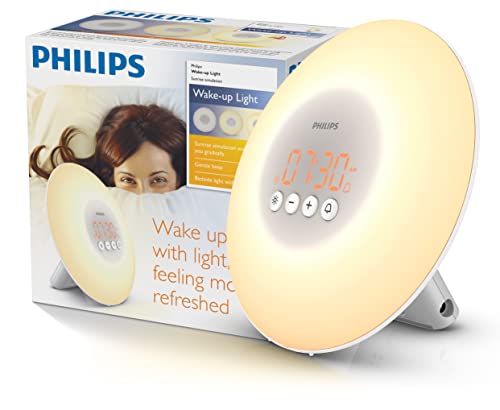
The Philips SmartSleep HF3500/60 is the budget pick in this roundup, offering the core sunrise experience in a smaller, simpler package. Its sunrise simulation brightens gradually to 200 lux, enough for a dark bedroom, and finishes with a gentle beep. Ten brightness settings let you tune the light to your room, and the compact round body fits crowded nightstands.
There is no sunset mode, no FM radio, and no choice of natural sounds here. What you get is the essential idea done cleanly: light that rises slowly before your alarm time, plus a touch control and a digital display. A two-year manufacturer warranty backs the device, and the corded design keeps it running through the night without battery worries.
This model suits first-time buyers, guest rooms, and anyone who wants to try a sunrise alarm without committing to a premium device. Availability can vary because this is an older model in the Philips lineup, so check the listing before settling on it as your only option.
Specs
- Model: HF3500/60
- Light intensity: up to 200 lux
- Brightness settings: 10
- Wake-up sounds: 1 gentle beep
- Sunrise simulation: yes
- Sunset simulation: no
- FM radio: no
- Control method: touch
- Display: digital
- Power source: corded electric
- Warranty: 2 year manufacturer
- Tier: budget
Hatch Restore 3 Sunrise Alarm Clock

The Hatch Restore 3 is the best wake up light for people who want a full sleep routine built around one device. It combines a sunrise alarm clock, a sound machine, and a smart light, controlled through a companion app and a dial on top of the unit. The sunrise brightens gradually before your alarm time, then a chosen sound from its library finishes the wake-up. In the evening, the same device runs wind-down routines with dimming light and calming audio.
Setup runs through the app over Wi-Fi, and the touchscreen and dial handle day-to-day changes without a phone in hand. The sound library covers white noise, nature sounds, and sleep stories, though part of the deeper content library sits behind an optional Hatch Plus subscription. The device also works as a reading light and a night light.
This model suits anyone who already uses sound to sleep and wants light added to the routine, or anyone who likes scheduling different alarms for weekdays and weekends. It is a premium-tier pick, and the app setup means it fits best in a home with reliable Wi-Fi.
Specs
- Model: Restore 3
- Item model number: RESTORE05
- Clock form: sunrise
- Sunrise alarm: yes
- Sound machine: yes, with sound library
- Smart light: yes
- Control: companion app, dial, and touchscreen
- Reading light: yes
- Night light: yes
- Optional subscription: yes, for full content library
- Tier: premium
Lumie Bodyclock Luxe 700FM

The Lumie Bodyclock Luxe 700FM is the premium pick for buyers who want the most flexible sunrise and sunset of any light in this roundup. Its sunrise and sunset durations adjust from 15 to 90 minutes, far longer than most rivals, and it offers more than 25 sleep and wake sounds alongside FM radio and high-quality Bluetooth speakers.
The Bluetooth speakers let you play your own audio through the device. A three-year warranty backs it, which is longer coverage than most sunrise clocks offer.
This model suits anyone who takes the wind-down half of the routine as seriously as the wake-up, and anyone who wants a single bedside device to replace a separate speaker and alarm clock.
Specs
- Model: Bodyclock Luxe 700FM
- Sunrise and sunset duration: 15 to 90 minutes
- Sleep and wake sounds: 25 or more
- FM radio: yes
- Bluetooth speakers: yes
- Low-blue light mode: yes
- Alarm settings: daily and weekly
- Warranty: 3 year
- Tier: premium
Loftie Smart Lamp

The Loftie Smart Lamp takes a different approach from every other light in this roundup: it is a lamp first, with sunrise and sunset built in and no alarm sound at all. It brightens gradually in the morning and dims slowly in the evening, with custom color modes that let you choose the exact tone of light for waking, reading, or winding down.
Because it has no speaker or buzzer, the Loftie Smart Lamp suits light sleepers who wake at the first glow and dislike being startled by sound. It also works as an everyday bedside or desk lamp, so it earns its place on the nightstand even outside sleep hours. An optional app unlocks more color modes and routines, and the modern design fits bedrooms where a traditional alarm clock would look out of place.
Pair this lamp with a separate alarm if you sleep heavily, since light alone may not be enough on dark winter mornings. As a pure wake-up light, though, it is the most elegant option here.
Specs
- Model: LAMP_WHITE
- Sunrise alarm: yes, light only
- Sunset mode: yes
- Color modes: custom, unlimited
- Red light modes: yes
- Alarm sound: none
- App: optional, free
- Use as bedside lamp: yes
- Tier: mid-range
Frequently Asked Questions
Do wake-up lights work for heavy sleepers?
A wake-up light can help heavy sleepers, but light alone is often not enough. Choose a model that pairs the sunrise with an audible alarm, such as the Philips HF3520/60 or the Hatch Restore 3, and set the sunrise to its longest duration so the light has time to build. Keep a backup alarm for the first few weeks while you learn how you respond.
How long should the sunrise last?
Most people do best with a sunrise of 20 to 30 minutes. Heavy sleepers may prefer 30 minutes or longer, and the Lumie Bodyclock Luxe 700FM stretches to 90 minutes for the slowest risers. If you wake before the alarm sound, shorten the sunrise until the light and the sound finish together.
Can a wake-up light replace my alarm clock?
A wake-up light with a built-in alarm sound can replace a standard alarm clock, and models such as the Philips HF3520/60 and the Hatch Restore 3 include two alarm settings for different days. A light-only model such as the Loftie Smart Lamp cannot replace an alarm clock on its own, so pair it with a phone alarm or a separate clock if you need a guaranteed wake time.
Do wake-up lights need Wi-Fi or an app?
Most wake-up lights work entirely without Wi-Fi or an app, using buttons or touch controls on the device itself. Smart models such as the Hatch Restore 3 need an app and Wi-Fi for setup and for their full sound libraries. If you want a phone-free bedroom, choose a model with full onboard controls.
Conclusion
The best wake up light depends on how you sleep and how much technology you want beside your bed. The Philips SmartSleep HF3520/60 is the strongest all-round choice, with a colored sunrise, a sunset wind-down, natural sounds, and FM radio at a mid-range tier. The Philips HF3500/60 covers the same core idea for less, the Hatch Restore 3 builds a complete app-driven sleep routine, the Lumie Bodyclock Luxe 700FM offers the longest sunrises and sunsets, and the Loftie Smart Lamp delivers a light-only wake for people who rise at the first glow.
Start with the sunrise length and the sound you need, then let the extras decide the winner. A light that wakes you gently is one you will actually keep using, and any of these five can turn a jarring alarm into a calmer morning.


