Key takeaways
- Compare the best yoga mats for grip, cushioning, and durability, and find the right mat for home practice, studio classes, hot yoga, and travel.
As an Amazon Associate, we earn from qualifying purchases.
The best yoga mat for most people is the Manduka PRO Yoga Mat, because its dense 6mm cushioning stays stable underfoot, its closed-cell surface resists moisture, and it is built to last for years of regular practice. If that mat is heavier than you want to carry, the Gaiam Essentials Premium Yoga Mat is the budget-friendly alternative, while the Liforme Original Yoga Mat is the premium pick for practitioners who want printed alignment guides and exceptional grip.
Table of Contents
- How to Choose a Yoga Mat
- Manduka PRO Yoga Mat
- Gaiam Essentials Premium Yoga Mat
- Liforme Original Yoga Mat
- JadeYoga Harmony Yoga Mat
- Gaiam Premium Print Yoga Mat
- Which Mat Fits Your Practice
- Frequently Asked Questions
- Conclusion
- Product and ASIN Reference
How to Choose a Yoga Mat
A yoga mat has three jobs: keep you from slipping, cushion your joints, and give you enough space to move. Grip matters most in poses where your hands and feet carry weight, such as downward dog and warrior sequences. Closed-cell mats resist sweat and moisture, which keeps the surface cleaner between sessions, while open-cell natural rubber mats tend to grip better when your hands get damp. Think about whether you sweat heavily during practice before you decide.
Thickness is the next decision. Mats around 4mm to 5mm give a good balance of cushioning and stability for most styles, from gentle stretching to vinyasa flow. A 6mm mat protects knees and elbows on hard floors, but the extra cushioning can make balancing poses feel less steady. Thinner travel mats fold or roll into a small bundle and weigh far less, which matters if you carry your mat to a studio every day.
Size deserves attention too. The standard mat measures about 68 inches long and 24 inches wide, which suits most people. Taller practitioners should look for a mat of 71 inches or longer, and a 26-inch width gives extra room for wider stances. Weight is the trade-off for durability: dense studio mats can weigh seven pounds or more, while lightweight foam mats weigh closer to two pounds. A mat that lives at home can be heavy, but a mat you carry across town should be light.
Material shapes both feel and care. PVC mats are durable, easy to clean, and hold up to years of use. TPE mats are lighter and often marketed as more eco-friendly, with a softer feel underfoot. Natural rubber mats offer strong grip and a firm, grounded feel, but they can carry a rubber smell when new and need gentle cleaning. Finally, look at what comes with the mat: a carrier strap or bag saves you a separate purchase, and alignment markings help newer practitioners place hands and feet with confidence.
Manduka PRO Yoga Mat

The Manduka PRO is the mat many studio teachers use, and its reputation rests on density. At 6mm thick, the high-density PVC cushioning protects knees, hips, and elbows without collapsing under your weight in standing poses. The closed-cell surface seals out moisture, which helps the mat stay hygienic between cleanings. Grip improves as the mat breaks in, so the first few weeks of practice feel different from the months that follow.
Size is generous. The standard version measures 71 inches long and 26 inches wide, giving taller practitioners and wider stances room that a standard 68-inch mat does not. The trade-off is weight: the standard mat weighs about 7.5 pounds, so this is a mat that works best when it stays where you practice. A longer 85-inch version exists for very tall practitioners. The mat is made in an emissions-free facility in Germany, is OEKO-TEX certified, and is free of latex, which matters for anyone with a latex sensitivity.
This is the premium pick in this roundup, and it suits dedicated practitioners who practice several times a week and want one mat that lasts for years. If you carry your mat to class daily, the weight may push you toward a lighter option.
Specs
- Thickness: 6mm
- Dimensions: 71 inches long by 26 inches wide
- Weight: about 7.5 pounds
- Material: high-density PVC, closed-cell surface
- Certifications: OEKO-TEX certified, latex-free
- Made in: Germany
- Tier: premium
Gaiam Essentials Premium Yoga Mat

The Gaiam Essentials Premium Yoga Mat is the straightforward budget pick in this roundup. It measures 72 inches long by 24 inches wide with a thickness of one quarter inch, which gives enough cushioning for kneeling poses on a hard floor without feeling unstable in standing balances. The mat ships with a carrier sling, so you can roll it up and carry it to class without buying a separate strap.
The textured surface provides dependable grip for everyday flows, and the mat works well for gentle yoga, stretching, and Pilates-style floor work. Its foam construction keeps it light enough to carry comfortably, which makes it a practical choice for beginners and for anyone who practices away from home. The mat is easy to wipe clean after a session, and it rolls up compactly for storage.
This mat suits beginners, casual practitioners, and anyone setting up a first home practice space. It does not offer the dense, long-lived build of a premium studio mat, and heavy sweaters may find its grip less secure in the sweatiest flows.
Specs
- Thickness: one quarter inch
- Dimensions: 72 inches long by 24 inches wide
- Material: foam with a textured non-slip surface
- Included: carrier sling
- Tier: budget
Liforme Original Yoga Mat

The Liforme Original Yoga Mat is built around its alignment system. Printed guide lines run across the surface, marking where hands and feet should land in common poses, which removes guesswork for practitioners who are still learning alignment. The mat measures about 72 inches long and 26 inches wide, with a 4.2mm thickness that balances joint cushioning with the firmness needed for stable balances. A free yoga bag comes included.
Grip is the standout feature. The top layer uses a natural rubber base with a polyurethane surface that the maker calls Warrior-like grip, and it holds well in both dry and sweaty conditions. That makes the mat a strong choice for hot yoga and vigorous vinyasa, where slipping hands are the main frustration. The eco-friendly construction uses biodegradable materials, and the mat is sweat-resistant, so it handles damp sessions without absorbing moisture the way open-cell foam can.
This is a premium-tier mat for practitioners who want guidance built into the surface and grip they can trust in sweaty flows. The alignment lines are genuinely useful for newer yogis, and experienced practitioners often keep using them as a reference for symmetry.
Specs
- Thickness: 4.2mm
- Dimensions: about 72 inches long by 26 inches wide
- Material: natural rubber base with a polyurethane grip surface
- Features: patented alignment system, sweat-resistant surface
- Included: free yoga bag
- Tier: premium
JadeYoga Harmony Yoga Mat
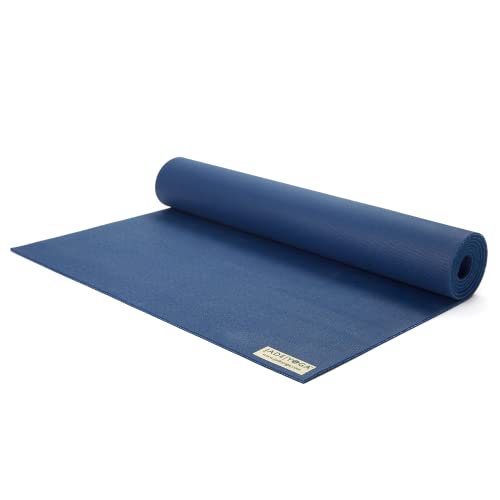
The JadeYoga Harmony Yoga Mat is the natural rubber pick in this roundup. Made from natural rubber harvested from rubber trees, it offers the open-cell grip that many experienced practitioners prefer: the surface gets grippier as your hands get damp, which is the opposite of how most foam mats behave. The mat measures 74 inches long and 24 inches wide, with a thickness of three sixteenths of an inch, giving a firm, grounded feel that supports balance poses without sinking.
JadeYoga makes the Harmony mat in the United States, and the company plants a tree for every mat sold. The natural rubber construction means the mat can carry a rubber smell when new, which fades with airing and use. Cleaning calls for a gentle approach: wipe it down with a damp cloth and mild soap, and keep it out of prolonged direct sunlight.
This mat suits intermediate and experienced practitioners who want a firm, grippy surface and care about sustainable materials. It is a mid-range pick that rewards regular use: the more you practice on it, the better the grip feels. If you need maximum knee cushioning on a hard floor, pair it with a knee pad or choose a thicker mat from this roundup instead.
Specs
- Thickness: three sixteenths of an inch
- Dimensions: 74 inches long by 24 inches wide
- Material: natural rubber, open-cell surface
- Made in: United States
- Sustainability: a tree is planted for every mat sold
- Tier: mid-range
Gaiam Premium Print Yoga Mat

The Gaiam Premium Print Yoga Mat adds personality to the budget end of this roundup. The reversible design gives you two looks in one mat, and the printed pattern helps the mat stand out in a crowded studio. At 6mm thick, it offers more cushioning than most mats at its tier, which helps knees and elbows during floor work and kneeling poses. The mat measures 68 inches long and 24 inches wide, the standard size that fits most practitioners.
The textured non-slip surface works well for gentle yoga, Pilates, and floor workouts, and the extra thickness makes it a comfortable choice for anyone practicing on tile or hardwood. The mat is light enough to carry and easy to roll for storage. Because it is reversible, you can flip it over when one side shows wear, which extends its useful life.
This mat suits practitioners who want thick cushioning without a premium-tier outlay, and anyone who likes a patterned mat. It does not match the dense, heavy build of a studio-grade mat, and the grip is best suited to moderate rather than very sweaty flows.
Specs
- Thickness: 6mm
- Dimensions: 68 inches long by 24 inches wide
- Material: foam with a textured non-slip surface
- Design: reversible with a printed pattern
- Tier: budget
Which Mat Fits Your Practice
Match the mat to your routine, not to someone else’s. If you practice daily at home and want a mat that lasts for years, the Manduka PRO is the strongest choice, with the Liforme Original close behind for anyone who wants alignment guides and strong sweaty-flow grip. If you practice a few times a week and carry your mat to class, the Gaiam Essentials Premium is light, affordable, and comes with a carrier sling. If you sweat heavily and want grip that improves with moisture, the JadeYoga Harmony is the natural rubber answer. If your knees need extra cushioning on a hard floor, either 6mm mat in this roundup will help.
Think about where the mat will live, how far you carry it, and how much you sweat. Those three answers narrow the field faster than any list of features.
Frequently Asked Questions
What thickness of yoga mat is best for beginners?
A mat between 4mm and 6mm works well for most beginners, cushioning knees and elbows on hard floors while staying firm enough for standing balances. Thinner mats feel more stable but offer less padding, while thicker mats cushion better but can wobble in balancing poses.
How do I clean a yoga mat?
Wipe the mat with a damp cloth and a small amount of mild soap after each session, then let it air dry flat before rolling it up. Avoid harsh cleaners and soaking, which can damage the surface, and keep natural rubber mats out of prolonged direct sunlight.
Do I need a special mat for hot yoga?
Hot yoga calls for a mat with strong grip when wet. Closed-cell mats with textured surfaces and natural rubber mats both perform well in sweaty conditions, and a mat towel can add grip on top of any mat if your hands still slip during the hottest flows.
How long should a yoga mat last?
A well-made mat lasts for years with regular use, and premium dense mats often last the longest. Replace a mat when the surface starts flaking, the grip fades despite cleaning, or the cushioning compresses and no longer springs back.
Conclusion
The best yoga mat is the one that matches your practice, your floor, and your commute. The Manduka PRO leads this roundup for durability and stability, the Liforme Original leads for alignment guidance and sweaty-flow grip, and the JadeYoga Harmony leads for natural rubber grip. On the budget side, the Gaiam Essentials Premium covers the basics with a carrier sling included, while the Gaiam Premium Print adds thick 6mm cushioning at a friendly tier.