Our Short List of 3
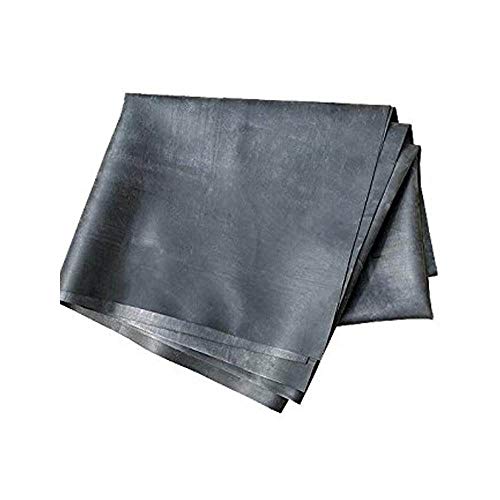
- Material: 45-mil EPDM rubber
- Size: 15 ft x 20 ft
- Fish safe: listed as fish safe
- Warranty: 20-year limited manufacturer warranty

- Material: 45-mil EPDM rubber
- Size: 15 ft x 20 ft
- Fish safe: listed as fish and wildlife safe
- Warranty: 25-year manufacturer warranty; lifetime with UnderGuard underlayment

- Material: 14.5-mil PVC with polyester mesh reinforcement
- Size: 7 ft x 10 ft
- Fish safe: listed as environmentally safe and non-toxic
- Warranty: confirm terms on the listing
All 4 Picks at a Glance
| Product | Specs | Action |
|---|---|---|
| 2. Firestone PondGard 45 Mil EPDM Pond Liner, 15 ft x 20 ft |
| Check price on Amazon |
| 3. LifeGuard 15 ft x 20 ft EPDM Pond Liner, 45 Mil |
| Check price on Amazon |
| 4. TotalPond 7 ft x 10 ft PVC Pond Liner |
| Check price on Amazon |
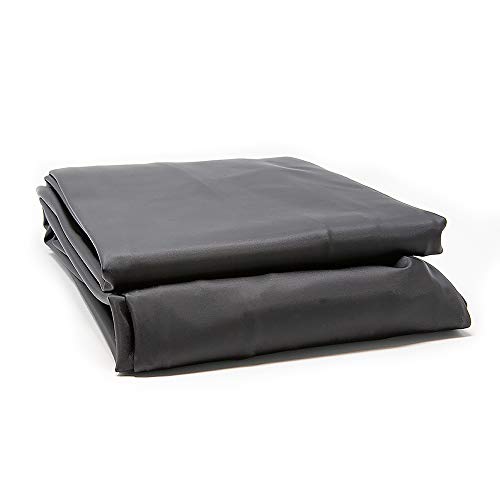 5. Beckett Flexible Pre-Cut PVC Pond Liner, 8 ft x 10 ft |
| Check price on Amazon |
Key takeaways
- Looking for the best price pond liners? Compare five EPDM and PVC liners by material, thickness, size and warranty to find the right fit for your pond.
A pond liner is the one part of a water garden you never want to think about twice. Once it is buried under rock and water, replacing it means draining the pond and starting over, so choosing the right sheet the first time matters more than almost any other decision in the build. If you are comparing the best price pond liners, the real question is not which sheets look alike on a screen, but which material, thickness and size match the pond you plan to build.
This guide compares five liners sold on Amazon, from thick 45-mil EPDM rubber sheets built for koi ponds to lighter PVC pre-cuts made for small fountains and container water gardens. For each liner you will find the material, the listed thickness, the sheet size, the fish-safety notes and the warranty terms stated on the listing, so you can match a liner to your pond with confidence.
What to Look For
A pond liner is a flexible waterproof membrane that sits between the soil and the water. It has one job: hold water in, season after season, without leaking, tearing or harming fish and plants. The sheets below all do that job, but they do it with different materials, thicknesses and sizes.
Material: EPDM, PVC and RPE
EPDM is a synthetic rubber and the material most pond builders reach for first. It stays flexible in cold weather, resists UV light, conforms to shelves, curves and irregular shapes, and is widely listed as safe for fish and plants. A 45-mil EPDM sheet is the standard choice for permanent ponds and koi ponds, where the liner will stay in place for decades.
PVC is a lighter, stiffer plastic. It is easier to handle in large sheets, folds into crisp shapes, and comes in many pre-cut sizes for small ponds, fountains and container water gardens. PVC becomes less flexible in cold weather than EPDM, so it suits mild climates and smaller features better than deep, permanent ponds. Reinforced PVC, with a polyester mesh woven between layers, adds puncture resistance without much extra weight.
Thickness: What a Mil Means
Liner thickness is measured in mils, where one mil equals one thousandth of an inch. A 45-mil sheet is 0.045 inches thick; a 20-mil sheet is 0.020 inches thick. Thicker is not automatically better for every pond, but thickness is the simplest way to compare puncture resistance between sheets of the same material.
For a permanent pond with koi, rocks and plant roots pressing against the liner, 45-mil EPDM is the common standard. For a small decorative pond or a fountain with a smooth, prepared base, a 20-mil PVC sheet is often enough. A 14.5-mil reinforced PVC sheet sits below that in thickness, but the woven mesh inside it adds strength that a plain sheet of the same thickness would not have. Whatever thickness you choose, preparing the base matters as much as the sheet itself: remove sharp stones, roots and debris, and consider a geotextile underlayment as a cushion between the soil and the liner.
Size: Measure Twice, Cut Once
The most common sizing mistake is buying a sheet that is too small. To find the length you need, measure the longest point of the pond, add twice the maximum depth, and add one to two feet of overlap on each side so the edge can be tucked under coping stones or buried in a trench. Do the same for the width. A sheet that is slightly too large can be trimmed or folded; a sheet that is too short cannot be stretched. Always confirm the exact sheet dimensions on the listing before ordering, because the same product line often comes in many sizes under separate listings.
Fish Safety and UV Resistance
If the pond will hold fish, confirm on the listing that the liner is stated as fish safe. EPDM liners from the major pond brands are commonly certified fish and wildlife safe, and PVC liners from pond brands are generally described as safe for fish and plants as well. Avoid using roofing membranes or construction sheeting in a fish pond unless the listing states clearly that the material is fish safe, because products made for other uses may contain additives that are not meant for aquatic life.
UV resistance matters because the edges of a liner sit in sunlight where the sheet folds over the pond rim. EPDM holds up well to sun exposure, and pond-grade PVC is treated for UV resistance too. Covering the exposed edge with stone or coping protects the liner and gives the pond a finished look at the same time.
Top Picks
The five liners below cover the main ways people build ponds: three thick EPDM sheets for permanent and koi ponds, and two PVC pre-cuts for small ponds and fountains. Each section states the material, thickness, size and warranty exactly as listed.
1. Firestone PondGard 45 Mil EPDM Pond Liner, 15 ft x 25 ft
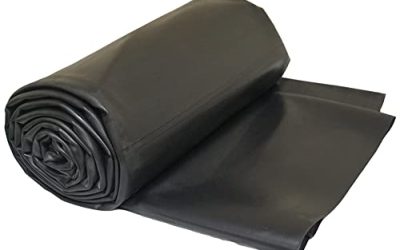
Firestone PondGard is the liner most often named first when pond builders talk about 45-mil EPDM. The sheet is made from EPDM rubber, measures 45 mil thick, and is listed as fish safe, with a 20-year limited manufacturer warranty. The listing describes the material as tear and puncture resistant, and notes that it is made for ponds, streams and waterfalls rather than for a single shape of water feature.
At 15 feet by 25 feet, this is a large sheet for a medium to large pond. Using the standard sizing rule, it fits a pond of roughly 10 feet by 20 feet at a depth of about 2 feet, with overlap left on each side for edging. That makes it a strong match for a backyard koi pond or a water garden with a waterfall, where the liner must fold over shelves and around rocks without splitting.
EPDM is the most forgiving material to install. It drapes into curves, folds without creasing into sharp ridges, and stays flexible through cold winters. The trade-off is weight: a sheet this size is heavy, and you will want a second pair of hands to unfold it and position it. Lay a geotextile underlayment first, unfold the liner with the slack spread evenly, and fill slowly so the weight of the water settles the sheet into place before you trim the edges.
- Material: 45-mil EPDM rubber
- Size: 15 ft x 25 ft
- Fish safe: listed as fish safe
- Warranty: 20-year limited manufacturer warranty
- Model number: FSPG15X25-45
- Suited for: medium to large ponds, koi ponds, waterfalls
2. Firestone PondGard 45 Mil EPDM Pond Liner, 15 ft x 20 ft
- Material: 45-mil EPDM rubber
- Size: 15 ft x 20 ft
- Fish safe: listed as fish safe
- Warranty: 20-year limited manufacturer warranty
This is the same PondGard 45-mil EPDM material in a smaller 15-foot by 20-foot sheet. It carries the same listing details: EPDM rubber, 45 mil thick, fish safe, tear and puncture resistant, with a 20-year limited manufacturer warranty. The model number for this size is W56PL451520.
The smaller sheet fits a pond of roughly 10 feet by 15 feet at a depth of about 2 feet, with overlap for edging. That size covers a large share of backyard ponds, and the lighter weight makes it easier for two people to handle than the 15-by-25 sheet. If your pond falls between sizes, choose the sheet that leaves overlap on every side. A sheet that is a little large trims neatly; a sheet that is a little short leaves an edge you cannot fix.
3. LifeGuard 15 ft x 20 ft EPDM Pond Liner, 45 Mil
- Material: 45-mil EPDM rubber
- Size: 15 ft x 20 ft
- Fish safe: listed as fish and wildlife safe
- Warranty: 25-year manufacturer warranty; lifetime with UnderGuard underlayment
LifeGuard is the EPDM pond liner line from Anjon Manufacturing, and this 15-foot by 20-foot sheet is its mid-size option. The liner is 45-mil EPDM rubber, listed as fish and wildlife safe, and made for outdoor ponds, waterfalls, aquaponics, retention basins and water gardens. The manufacturer states a temperature range of minus 40 degrees Fahrenheit to 175 degrees Fahrenheit, which covers hard freezes and hot summers alike.
The warranty is the standout detail on this listing. LifeGuard carries a standard 25-year manufacturer warranty, and the listing states that the warranty extends to lifetime coverage when the liner is installed with UnderGuard underlayment, the maker’s own non-woven geotextile. That pairing is useful if you plan to buy underlayment anyway, because the underlayment protects the liner from punctures while also extending the warranty terms.
In use, the LifeGuard sheet behaves like other 45-mil EPDM: it conforms to pond shapes, attaches to waterfalls and skimmers, and accommodates pipe connections without leaking, according to the product description. The 15-by-20 size fits a pond of roughly 10 feet by 15 feet at about 2 feet deep, with overlap for edging. It is a direct alternative to the Firestone sheet of the same size, with the longer stated warranty as its main point of difference.
4. TotalPond 7 ft x 10 ft PVC Pond Liner
- Material: 14.5-mil PVC with polyester mesh reinforcement
- Size: 7 ft x 10 ft
- Fish safe: listed as environmentally safe and non-toxic
- Warranty: confirm terms on the listing
TotalPond’s Pond Skins liner is the PVC option in this guide, and it is made for small ponds. The sheet measures 7 feet by 10 feet, is 14.5 mil thick, and is built from PVC reinforced with a polyester mesh weave between the layers. The listing states that it suits ponds up to 200 gallons, and describes the surface as textured to encourage the growth of helpful bacteria.
The mesh reinforcement is what makes a 14.5-mil sheet viable. The weave adds puncture resistance and tear strength, and the listing notes that the sheet is lighter than a standard EPDM liner of similar size, which makes it easier for one person to position. The PVC is described as UV resistant and tear resistant, and the black color blends into the pond so the liner is less visible under water and along the edges.
5. Beckett Flexible Pre-Cut PVC Pond Liner, 8 ft x 10 ft
- Material: 20-mil PVC
- Size: 8 ft x 10 ft
- Fish safe: listed as safe for fish and plants
- Warranty: 15-year limited manufacturer warranty
Beckett’s pre-cut PVC liner is the second PVC sheet in this guide and the thickest PVC here, at 20 mil. The sheet measures 8 feet by 10 feet, is made from polyvinyl chloride, and is listed as safe for fish and plants. The listing states that it holds up to 266 gallons and carries a 15-year limited manufacturer warranty.
The extra thickness over the TotalPond sheet gives this liner more puncture resistance on rough ground, which matters for a small pond dug into rocky soil. The PVC is flexible and light, so one person can usually unfold it and fit it to the excavation without help. The listing notes UV resistance and describes the material as puncture resistant and long lasting, with no maintenance needed once installed.
An 8-by-10 sheet fits a small pond of roughly 5 feet by 7 feet at about 18 inches deep, with overlap for edging. That covers small garden ponds, koi ponds for a few small fish, water gardens and fountains. Beckett also makes this liner in other pre-cut sizes, including a 10-by-12-foot sheet under a separate listing, so if your pond is slightly larger, look for the next size up in the same product line rather than stretching this sheet.
Comparison at a Glance
| Liner | Material | Thickness | Size | Warranty |
|---|---|---|---|---|
| Firestone PondGard 15 x 25 ft | EPDM rubber | 45 mil | 15 ft x 25 ft | 20-year limited |
| Firestone PondGard 15 x 20 ft | EPDM rubber | 45 mil | 15 ft x 20 ft | 20-year limited |
| LifeGuard 15 x 20 ft | EPDM rubber | 45 mil | 15 ft x 20 ft | 25-year; lifetime with underlayment |
| TotalPond 7 x 10 ft | PVC, mesh reinforced | 14.5 mil | 7 ft x 10 ft | Confirm on listing |
| Beckett 8 x 10 ft | PVC | 20 mil | 8 ft x 10 ft | 15-year limited |
The pattern in the table is the pattern of the whole guide. EPDM at 45 mil is the choice for permanent and koi ponds, where flexibility, thickness and a long warranty matter most. PVC at 14.5 to 20 mil is the choice for small ponds and fountains, where a light, pre-cut sheet is easier to install. Size is the other half of the decision: the sheet must cover the pond’s length and width plus twice the depth, with overlap to spare.
Frequently Asked Questions
What thickness pond liner do I need?
For a permanent pond or a koi pond, 45-mil EPDM is the standard most builders use, because it resists punctures from rocks and roots and stays flexible for decades. For a small decorative pond or a fountain with a smooth, prepared base, a 20-mil PVC liner is usually enough. A 14.5-mil PVC sheet with a reinforcing mesh weave can also work for a small pond, because the weave adds strength that plain PVC of the same thickness would not have. Whatever thickness you choose, clear the base of sharp stones and consider an underlayment, since a single sharp point under the liner can cause a leak that no thickness fully prevents.
Is EPDM or PVC better for a koi pond?
EPDM is the usual choice for a koi pond. It stays flexible in cold weather, folds neatly around shelves and curves, resists UV light, and the pond-grade EPDM liners in this guide are listed as fish safe. PVC is lighter and comes in handy pre-cut sizes, but it is stiffer in cold weather and is more often used for small ponds and fountains.
How do I calculate the liner size for my pond?
Measure the longest point of the pond, add twice the maximum depth, and add one to two feet of overlap for each side. Do the same for the width. For example, a pond 10 feet long, 8 feet wide and 2 feet deep needs a sheet at least 16 feet by 14 feet before overlap, so a 15-by-20-foot sheet would not cover the length, while a larger sheet would. Always measure at the widest and longest points, not at the average, and remember that shelves and curves use more liner than a flat-bottomed rectangle of the same outline.
Do I need underlayment under a pond liner?
Underlayment is not strictly required, but it is one of the most useful additions to a pond build. A non-woven geotextile underlayment sits between the soil and the liner and cushions it against stones, roots and rough ground. One maker in this guide also extends the liner warranty when its own underlayment is used, so check the warranty terms on the listing you buy from. If your soil is soft, sandy and free of stones, you may build without it, but the underlayment remains solid protection for a liner that is hard to replace later.
Conclusion
A pond liner is a long-term part of a water garden, and the right one depends on the pond you are building rather than on any single feature. For a permanent pond or a koi pond, a 45-mil EPDM sheet from Firestone PondGard or LifeGuard gives the thickness, flexibility and warranty terms that suit a pond meant to last for decades. For a small pond, a patio water garden or a fountain, a pre-cut PVC sheet from TotalPond or Beckett is lighter to install and sized for the job, as long as you respect the gallon limit stated on the listing.
Disclosure: As an Amazon Associate, s2tp.co earns from qualifying purchases.