Key takeaways
- Compare the best electric pressure washers for home use, with verified models for driveways, decks, siding, and cars, plus a clear guide to PSI and GPM.
As an Amazon Associate we earn from qualifying purchases.
A pressure washer turns a weekend of scrubbing into an afternoon of rinsing. Green algae on a driveway, mildew on siding, mud caked into a wheel arch, pollen film on a deck: all of it comes off faster with a focused jet of water than with a brush and a bucket. For home use, electric models have become the default choice, and for good reason. They start with a trigger pull instead of a pull cord, they run quietly enough to use on a Saturday morning without annoying the whole street, they need no fuel or oil changes, and they store upright in a corner of the garage.

The catch is that electric pressure washers are not all built alike. Output figures are quoted in two different ways, hose and cord lengths decide how much of your property you can reach from one outlet, and the detergent setup matters more than most first-time buyers expect. This guide explains the numbers that matter, then walks through four electric models that are sold on Amazon US and suit typical home work: washing cars, cleaning concrete and pavers, stripping grime from siding and fences, and refreshing decks and patios. Every model below is corded electric, so there are no fuel costs and no exhaust, and each one is matched to the jobs it handles best.
Disclosure: This article contains affiliate links. If you buy through these links, we may earn a commission at no additional cost to you.
How to Choose an Electric Pressure Washer for Home Use
Start with PSI and GPM together
Pressure is measured in PSI (pounds per square inch) and flow in GPM (gallons per minute). Pressure is what lifts dirt off a surface; flow is what carries the loosened dirt away. A machine with high pressure and low flow can etch a narrow clean line into a filthy driveway but take all day to finish it, because each pass only rinses a thin strip. For home use, most tasks sit comfortably in a band: car washing and delicate work need gentle settings, while concrete, brick, and stone respond well to the upper end of what home electric machines produce. As a rough guide, washing vehicles and outdoor furniture calls for the lower settings and wider spray patterns, siding and fences sit in the middle, and driveways, walkways, and garage floors benefit from the strongest output a home electric unit can sustain.
One caution on the numbers: manufacturers quote both a maximum PSI and, on better listings, a rated or working PSI measured under the PWMA standard. The maximum figure is a peak the pump can reach; the rated figure is closer to what you get in steady use. When two machines look similar on the headline number, the one with a stated PWMA rated figure is giving you the more honest comparison.
Reach: hose length plus cord length
Your working radius is the sum of the power cord and the high-pressure hose, minus whatever distance the outlet is from the work. A longer hose means moving the machine less often, which matters because dragging a washer across a wet driveway is nobody’s favorite job. Check both figures on the listing. A 35-foot cord paired with a 20- or 25-foot hose covers most single-story homes from one outdoor outlet. Also look for a GFCI plug on the cord, which is the standard safety protection for a tool that mixes water and mains electricity.
Nozzles and spray patterns
Most home machines use quick-connect nozzle tips. A 0-degree tip concentrates the jet into a pencil point for stubborn spots and should never be used on cars, wood, or anything painted. A 15-degree tip suits concrete and stone. A 25-degree tip is the general-purpose choice for siding, fences, and decks. A 40-degree tip gives the gentlest fan for vehicles, screens, and outdoor furniture. A soap tip drops the pressure so detergent can be drawn in and laid on thick. A turbo or rotary nozzle, included with some models, spins a tight jet in a small circle and speeds up flat concrete work noticeably. The more of these tips included in the box, the less you need to buy separately.
Detergent handling
There are two common setups. An onboard tank holds detergent in the machine and feeds it when you fit the soap tip; dual tanks let you keep two different detergents ready, for example a vehicle wash and a house wash. A foam cannon is a separate bottle that fits on the wand and lays down thick foam, popular for car washing. Either approach works; the question is whether you want the convenience built in or prefer to add an accessory later.
Pump protection and storage
A Total Stop System (TSS) shuts the motor off when you release the trigger and restarts it when you squeeze again. That saves wear on the pump and makes the machine quiet between passes. For storage, look at the footprint: most home electric washers stand upright, wind their cord and hose on hooks or reels, and roll on wheels. If garage space is tight, those details matter as much as the cleaning figures.
The Best Electric Pressure Washers for Home Use
1. Westinghouse ePX3100 — the balanced all-rounder
The Westinghouse ePX3100 sits in the middle of the home range and covers the widest spread of household jobs without demanding much storage space. It is rated at 2300 max PSI with up to 1.76 max GPM, which puts it firmly in the class that handles driveways and siding while still dialing back safely for vehicles with the right tip fitted.
- View on Amazon: https://www.amazon.com/dp/B083B2M9NT
The ePX3100 uses a four-nozzle quick-connect set, so switching from a concrete-cutting fan to a gentle vehicle rinse is a few seconds of work. An onboard soap tank feeds detergent through the soap nozzle, which keeps car washing and pre-treating siding simple: apply detergent at low pressure, let it dwell, then rinse with a wider fan tip. Westinghouse builds this model with anti-tipping technology, a low center of gravity design that keeps the unit upright when you tug the hose to reach a far corner, which is a small detail that prevents a common frustration with upright washers. The handle and wheels make it easy to move between the front drive and the back patio, and the whole unit stores standing in a modest footprint.
Choose the ePX3100 if you want one machine for the full household list: two cars, a concrete drive, vinyl siding, and a timber or composite deck. It is the straightforward pick for a first pressure washer, with enough output for annual deep cleans and enough control for weekly vehicle washes.
2. Westinghouse ePX3500 — the step-up for bigger areas
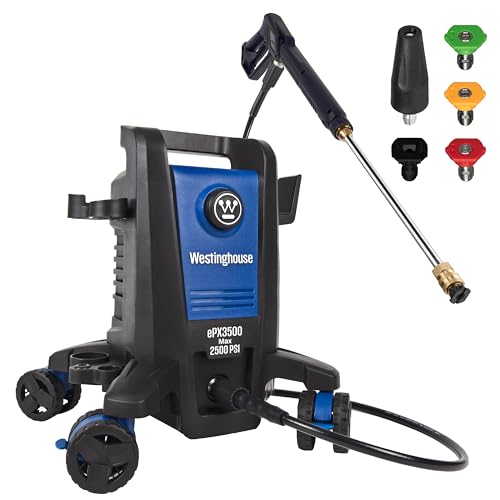
The Westinghouse ePX3500 is the stronger sibling in the same line, rated in the 2500 max PSI class, and aimed at homes with more hard surface to cover: long driveways, large patios, pool surrounds, and two-story siding that needs reach from the ground.
- View on Amazon: https://www.amazon.com/dp/B0BVGSX46M
That extra pressure headroom shows most on ground-in dirt. Mossy pavers, oil-stained garage concrete, and weathered fences all clean in fewer passes when the machine can sustain a forceful fan at a comfortable working distance, and the ePX3500 is built for exactly that kind of steady, longer session. It keeps the family traits that make the smaller model easy to live with: quick-connect nozzle changes, an onboard soap tank for detergent work, and a stable upright body that resists tipping when the hose is pulled at an angle. The wand and hose hardware are built to a heavier standard than entry-level machines, which matters if the washer will be used most weekends rather than twice a year.
Choose the ePX3500 if your property has a lot of concrete or stone, if you clean tall siding, or if you simply want the job done in fewer passes. Owners of small apartments or townhouses with a single parking pad will not need this much machine; owners of larger homes will feel the difference on every big clean.
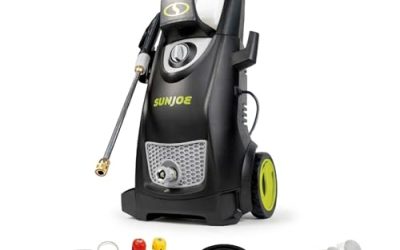
3. Sun Joe SPX3000 — the proven household workhorse

The Sun Joe SPX3000 is one of the longest-running home electric pressure washer designs on the market, and its layout explains why. It is rated at 2030 PSI under the PWMA standard with a rated flow of 1.2 GPM, figures quoted the conservative way, and it pairs them with a set of practical touches that suit mixed household work.
- View on Amazon: https://www.amazon.com/dp/B00CPGMUXW
The standout feature is the dual detergent tank system. Two removable tanks sit on the machine, so you can keep a vehicle detergent in one and a house-and-deck detergent in the other, and switch between them with a dial instead of emptying and refilling a single tank. Five quick-connect spray tips are included, covering the full range from a tight jet for spot work to a wide fan for rinsing, plus a soap tip for detergent application. A 20-foot high-pressure hose and a 35-foot power cord with GFCI protection give a working radius that reaches around most homes from a single outdoor outlet. The Total Stop System shuts the motor down when the trigger is released, which keeps the machine quiet while you move furniture or reposition a ladder, and extension wand reach helps with second-story siding and the tops of fences.
Choose the SPX3000 if you wash a variety of things in a single session and like the idea of two detergents ready to go. It is a sensible fit for households with cars, a deck, and siding to maintain, and its rated-under-standard figures make it easy to compare honestly against machines that quote only peak numbers.
4. AR Blue Clean BC383HSB — the compact option with a strong warranty

AR Blue Clean comes from the Annovi Reverberi group, an Italian pump maker whose pumps appear in many brands of washer, and the BC383HSB is its compact home model. It is rated at 2070 max PSI and 1.7 GPM from a 13-amp motor, a combination that favors flow, which is what rinses loosened dirt away quickly on patios and paths.
- View on Amazon: https://www.amazon.com/dp/B0B84DS1Z4
The BC383HSB includes a Total Stop System, so the motor only runs while you are actually spraying, and the package is built around quick setup: quick-connect fittings, an integrated detergent system, and a compact body that stores easily on a garage shelf or in a utility closet. That size makes it a good match for townhouses, condos with a small patio, and anyone who does not want to wheel a tall machine out for a ten-minute job. AR Blue Clean backs this model with 2-year coverage, longer than the warranty period commonly attached to home washers in this class, which is worth weighing if you plan to keep the machine for many seasons.
Choose the BC383HSB if your cleaning list is mostly patios, paths, outdoor furniture, bicycles, and the occasional car, and if easy storage matters as much as outright pressure. For very large driveways, one of the Westinghouse models above will finish faster.
Comparison Table
| Model | Max PSI | Flow | Detergent setup | Standout trait |
|---|---|---|---|---|
| Westinghouse ePX3100 | 2300 max PSI | 1.76 max GPM | Onboard soap tank | Anti-tipping body, four-nozzle set |
| Westinghouse ePX3500 | 2500 max PSI class | Strong flow for large areas | Onboard soap tank | Heavier-duty build for long sessions |
| Sun Joe SPX3000 | 2030 PSI (PWMA rated) | 1.2 GPM rated | Dual removable tanks | Two detergents ready, five spray tips |
| AR Blue Clean BC383HSB | 2070 max PSI | 1.7 GPM | Integrated detergent system | Compact body, 2-year coverage |
Frequently Asked Questions
How much pressure do I actually need for a driveway?
Concrete responds well to the output of any machine in this guide. The wider the fan tip you can use while still lifting the dirt, the faster the job goes, so flow matters alongside pressure. A turbo nozzle, where included or added later, speeds flat concrete work further by spinning the jet. Keep the tip moving and hold a consistent distance to avoid visible stripes on the finished surface.
Can an electric pressure washer damage siding or a deck?
Yes, if the wrong tip is used too close. Fit a 25- or 40-degree fan tip, start a comfortable distance away, and move closer only until the dirt lifts. Never use the 0-degree pencil jet on wood, painted surfaces, or vehicles. On decks, work along the grain and keep the fan moving to avoid furrowing the timber.
Is it safe to wash a car with one of these machines?
With the wide fan tips, yes. Use the 40-degree tip or the soap tip for detergent, stand back, and avoid aiming directly at badges, trim edges, and stone chips in the paint. The detergent tanks on these models are designed for vehicle wash products, and the gentle settings on a home electric machine are far kinder than the concentrated jet of a commercial unit.
What maintenance does an electric pressure washer need?
Very little compared with a fuel-powered machine. Rinse the detergent system with clean water after use, drain the pump before storing the washer anywhere that freezes, keep the inlet filter clean, and coil the hose without sharp kinks. Before winter storage, follow the manual’s pump-protection steps so trapped water cannot crack internal parts as it expands.
Can I run one of these from any outdoor outlet?
They are built for standard household circuits and include GFCI protection on the cord for safety around water. Plug directly into the outlet rather than through a lightweight extension lead, keep connections dry and off the ground where possible, and let the GFCI do its job.
Conclusion
For most homes, the Westinghouse ePX3100 is the balanced choice: strong enough for concrete, gentle enough for cars, and easy to store. Step up to the ePX3500 if your property has large areas of paving or tall siding and you want fewer passes per job. Pick the Sun Joe SPX3000 if you like the dual-tank detergent system and honestly rated figures, or the AR Blue Clean BC383HSB if compact storage and longer coverage matter most. Match the machine to the surfaces you clean most often, use the right tip for each surface, and any of these four will turn the annual deep clean from a chore into a quick job.