Our Short List of 3
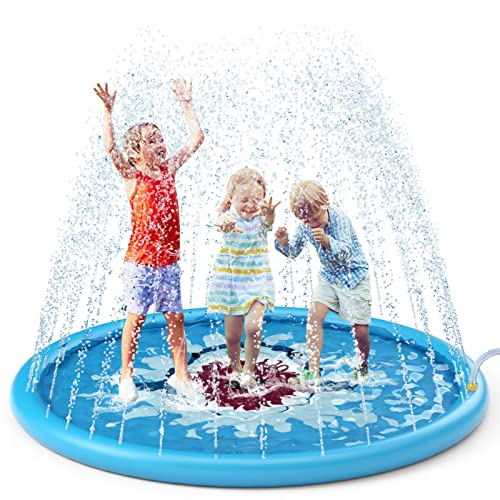
- Best for: Two or more small children playing together on a lawn.
- Diameter: 68 inches
- Material: PVC
- Manufacturer recommended age: 18 months and up
- Item weight: 2.09 pounds
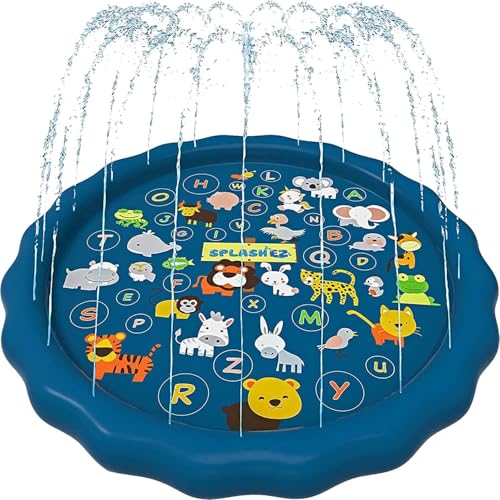
- Best for: Babies and young toddlers having their first summer of water play.
- Size: 60 x 60 x 4 inches
- Recommended age: 12 months and up
- Material: BPA-free, phthalate-free plastic
- Model number: SEZ0101002

- Best for: Toddlers playing on a patio, deck or other hard surface.
- Material: plastic
- Manufacturer recommended age: 18 months to 8 years
- Includes: splash pad and sprinkler, garden hose attachment
- Item model number: 413799
All 4 Picks at a Glance
| Product | Specs | Action |
|---|---|---|
| Jasonwell Splash Pad Sprinkler Play Mat |
| Check price on Amazon |
| SplashEZ 3-in-1 Splash Pad |
| Check price on Amazon |
| Step2 Water Bug Splash Pad |
| Check price on Amazon |
 VATOS Sprinkler Splash Pad UFO |
| Check price on Amazon |
Key takeaways
- Compare the best toddler sprinklers and splash pads for small children, with gentle spray, shallow water, safe materials and sizes matched to little legs.
A toddler sprinkler is not just a smaller version of a sprinkler made for older kids. The real decision is spray height and water depth: jets tuned for a six-year-old can knock a wobbly eighteen-month-old backwards, and a pad that pools too deep turns parents into full-time lifeguards. What you are actually choosing is how gentle the water feels, how shallow the play surface stays, and how much of the yard the mat takes up once it is spread out on the grass.
This guide is for parents of children roughly between one and three years old, grandparents setting up a visiting-toddler corner, and families with small lawns or patios. Every pick below is a splash pad or toddler sprinkler sold for small children, selected from the age ranges, diameters, materials and connection types stated on the Amazon product pages, so you can match a pad to your child’s age and your space before ordering.
Quick Picks
As an Amazon Associate we earn from qualifying purchases.
| Product | Best for | Key spec from title |
|---|---|---|
| Jasonwell Splash Pad Sprinkler Play Mat | Siblings and cousins splashing together | 68-inch diameter splash mat |
| SplashEZ 3-in-1 Splash Pad | The youngest toddlers, from 12 months | 60-inch A-to-Z learning mat |
| Step2 Water Bug Splash Pad | Standing sensory play on hard surfaces | Rigid pad for toddlers 1.5 years and up |
| VATOS Sprinkler Splash Pad UFO | Toddlers who chase moving water | 67-inch pad with rotating spray column |
How to Choose
Spray Height and Water Pressure Control
For a toddler, the spray itself is the whole product. Look for pads where the jets rise from the rim and arc inward, because the height is set by your tap: open the hose valve a little and the fountain stays ankle-high for a cautious one-year-old, open it further and a confident three-year-old gets a real shower. Avoid sprinklers with a single fixed jet or spinning arms that throw water sideways at face height. If a listing does not explain how spray height adjusts, treat that as a warning sign and pick a pad whose description ties spray height to water pressure instead.
Pad Size and Water Depth
Diameter decides who fits and how deep the water sits. A 60-inch pad suits one or two small toddlers and a compact yard, while a 67- or 68-inch mat gives siblings room without crowding. Just as important is the rim: an inflatable edge holds a shallow layer of water for sitting and splashing, which most toddlers prefer over running through jets. Check the stated diameter against your actual flat space, because a pad draped over a slope drains to one side, wrinkles under little feet, and leaves half the spray holes pointing the wrong way.
Material and the Stated Age Range
The age printed on the listing is your best safety shortcut. Pads rated from 12 or 18 months are designed for children who sit, crawl and toddle, while products starting at three years often assume a child who can stand against stronger spray. Material matters too: flexible PVC mats fold small but need a smooth surface underneath, since sticks and stones can puncture them. Rigid plastic pads cost more storage space yet shrug off patios and decks. Whichever type you choose, confirm the listing states the material plainly and matches the age of the youngest child who will use it.
Setup, Drainage and Storage
Every pad here connects to a standard garden hose, but the daily routine differs. Inflatable mats must be unrolled, filled through the rim, drained, dried and folded after each use, or they develop mildew in storage. Rigid pads rinse off and lean against a wall. Think about where the water goes when play ends: thousands of small spray holes empty fast, yet the pooled centre still needs tipping out. If your only spot is a balcony or a deck over a neighbour, a smaller pad with less pooling makes the cleanup far more manageable.
The 4 Best Options
Jasonwell Splash Pad Sprinkler Play Mat
- Best for: Two or more small children playing together on a lawn.
- Diameter: 68 inches
- Material: PVC
- Manufacturer recommended age: 18 months and up
- Item weight: 2.09 pounds
Two or more small children playing together on a lawn.
Lay it on smooth grass only; the PVC base can puncture on gravel or sharp sticks.
This 68-inch mat is the roomiest flexible option in the group, which makes it the natural pick when a toddler will share the water with an older sibling or a visiting cousin. The printed shark design gives small children a focal point to sit in while the rim jets spray inward, and because the spray height follows your hose pressure, the same mat works for a cautious first-timer in the morning and a bolder three-year-old by the afternoon. It folds down small once drained, so it suits families who cannot leave toys out on the lawn all week.
SplashEZ 3-in-1 Splash Pad
- Best for: Babies and young toddlers having their first summer of water play.
- Size: 60 x 60 x 4 inches
- Recommended age: 12 months and up
- Material: BPA-free, phthalate-free plastic
- Model number: SEZ0101002
Babies and young toddlers having their first summer of water play.
At 60 inches it fills up quickly once two toddlers and an adult’s feet are inside.
The SplashEZ is built for the youngest end of the toddler range, with a stated starting age of 12 months and a design that combines a splash pad, a sprinkler and a shallow wading pool in one 60-inch circle. The base is printed with an A-to-Z learning mat, so a baby who would rather sit and pat the water than run through jets still gets something to look at and touch. The listing states the plastic is BPA-free and phthalate-free, which matters for children who put wet hands straight into their mouths between splashes.
Step2 Water Bug Splash Pad
- Best for: Toddlers playing on a patio, deck or other hard surface.
- Material: plastic
- Manufacturer recommended age: 18 months to 8 years
- Includes: splash pad and sprinkler, garden hose attachment
- Item model number: 413799
Toddlers playing on a patio, deck or other hard surface.
It does not fold flat like a PVC mat, so check you have room to store a rigid pad.
Step2 takes a different route: instead of an inflatable mat, this is a rigid plastic pad with a spraying arch, made for toddlers who prefer standing, pouring and stomping over sitting in pooled water. It works on patios and decks where a soft PVC mat would slide or puncture, and when the hose is off it doubles as a sensory tray that can be filled with sand, rice or beans. The stated age range starts at 18 months, and the solid construction means no inflating, no patching and no waiting for a rim to fill before play can start.
VATOS Sprinkler Splash Pad UFO
- Best for: Active toddlers who get bored with a fixed spray pattern.
- Diameter: 67 inches
- Material: PVC
- Feature: rotating water spray column in the centre
- Type: inflatable splash play mat
Active toddlers who get bored with a fixed spray pattern.
The rotating column needs decent water pressure to spin, so very low-pressure taps may disappoint.
The VATOS pad adds movement to the formula: a rotating water spray column in the centre of a 67-inch inflatable mat, so the spray pattern changes while your toddler watches, chases and dodges. That motion keeps busy two- and three-year-olds engaged longer than a static ring of jets, while the surrounding mat still holds the shallow sitting water younger toddlers like. The listing describes the mat as non-toxic PVC, and the whole pad inflates through the water connection rather than a pump, keeping setup to a single hose fitting on a hot afternoon.
Which One Fits Your Situation
Your Child Is Barely Walking
Choose the SplashEZ 3-in-1. Its 12-month starting age is the lowest here, the spray stays gentle at low pressure, and the shallow wading design lets a baby sit in the middle and splash with both hands while the alphabet mat gives them something to study. The Jasonwell and VATOS pads are better saved for next summer, when balance improves.
Two or More Kids Share One Yard
The Jasonwell mat earns its place through sheer diameter. At 68 inches, a toddler and an older sibling can each claim a side without fighting over the middle, and the inward-aimed jets keep the water inside the circle instead of soaking the rest of the garden. If your children are both under three and love moving spray, the 67-inch VATOS pad is the alternative.
You Only Have a Patio or Deck
Pick the Step2 Water Bug. Its rigid plastic body will not puncture on boards or paving, it does not slide around like a wet PVC sheet, and the spraying arch keeps most of the water inside the pad’s footprint. As a bonus, it still works as a sand or rice sensory tray on days when nobody wants to get wet.
Your Toddler Needs Novelty to Stay Interested
The VATOS UFO pad is the one that changes while they watch. The rotating central column throws the spray in shifting patterns, which turns a simple splash mat into a chase-and-dodge game for energetic two- and three-year-olds. Run it at moderate pressure first, because the moving spray can surprise a nervous child at full power.
Common Mistakes
- Buying a sprinkler rated for ages three and up for a one-year-old, then finding the spray is far too strong at any pressure.
- Placing an inflatable PVC pad on gravel, rough concrete or stick-covered grass, and puncturing it on the first afternoon.
- Leaving a filled pad out overnight, which invites algae, mosquitoes and a slimy surface by the next day.
- Turning the tap to full pressure straight away instead of starting low and raising the spray as the child gains confidence.
- Forgetting that even shallow water needs constant supervision; a splash pad is not a substitute for an adult within arm’s reach.
Frequently Asked Questions
What age can a toddler start using a splash pad?
Most toddler pads state a starting age of 12 or 18 months, which matches when children can sit steadily and tolerate water on their skin. The SplashEZ begins at 12 months, while the Jasonwell, Step2 and VATOS pads start at 18 months. Whatever the listing says, stay within arm’s reach the whole time.
How do I keep the spray gentle enough for a small toddler?
Spray height on these pads is controlled by your tap, not by the pad itself. Open the hose valve slowly and stop when the jets arc just above ankle height, then raise the pressure gradually as your child gets braver. If your home has very strong water pressure, a partially closed valve or an inline regulator solves the problem.
Can a splash pad be used on a deck or balcony?
Soft PVC mats can work on smooth decking, but they slide when wet and can trap water underneath the boards. A rigid pad such as the Step2 Water Bug is the safer choice on hard surfaces because it stays put and drains predictably. On a balcony, choose the smallest pad and confirm the drainage will not pour onto neighbours below.
How should a splash pad be cleaned and stored?
Empty the pad fully after each use, rinse it with clean water, and let it dry completely in the shade before folding, because trapped moisture is what causes mildew and sticky surfaces in storage. Store inflatable mats loosely folded in a dry spot, and keep rigid pads rinsed and leaned upright. Check seams and the hose connector for cracks before the first use each season.