Key takeaways
- Find the best motor bike helmet for street riding with DOT certification, MIPS protection, ventilation, fit advice and five trusted picks for every rider.
The best motor bike helmet is the one that fits your head correctly, carries DOT certification, and suits the way you actually ride. A helmet that is too loose, too tight, or built for a different kind of riding will not protect you as well as it should, no matter how good it looks. This guide covers full-face and modular motorcycle helmets made for street riding, and explains safety standards, shell materials, ventilation, visors, and fit in plain terms.
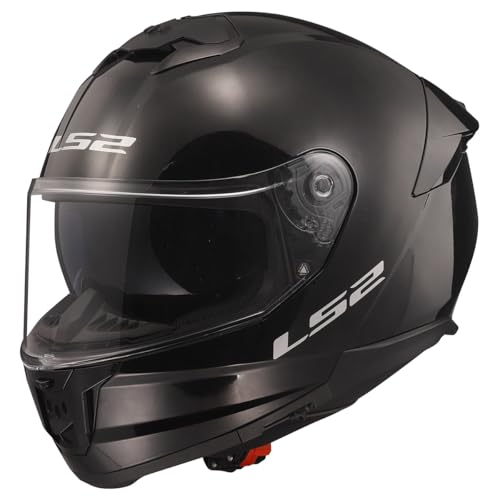

Quick answer: the Bell Qualifier DLX MIPS is the strongest all-round choice here, combining DOT certification, a MIPS liner, and a photochromic shield. Riders wanting ECE 22.06 and a built-in sun visor should look at the LS2 Stream II, while budget riders will find solid options in the YEMA YM-829 and the AHR RUN-M3.
Quick Picks
Our Short List of 3
All 4 Picks at a Glance
| Product | Specs | Action |
|---|---|---|
| LS2 Stream II | Check price on Amazon | |
| YEMA YM-829 | Check price on Amazon | |
 AHR RUN-M3 | Check price on Amazon | |
 GDM Ghost2 | Check price on Amazon |
How to Choose
Choosing a motorcycle helmet is a safety decision first and a comfort decision second. Style and graphics matter, but they should never come before certification, fit, and visibility.
Safety Certification
In the United States, a street motorcycle helmet should meet DOT FMVSS 218, which sets minimum requirements for impact absorption, penetration resistance, and retention. A DOT label is the baseline for legal road use in states with helmet laws. ECE 22.06 is a newer European standard that adds rotational-impact testing, so a helmet meeting both has been tested under two systems. A helmet with no stated certification should not be used for street riding. Confirm that the certification applies to the exact model and size you order.
Helmet Type
Full-face helmets cover the chin, jaw, and face, and offer the most complete protection for street riding. They also reduce wind noise and keep rain, insects, and road debris away from your face. Modular helmets, sometimes called flip-up helmets, have a chin bar that lifts so you can talk, drink, or get fresh air at a stop without removing the helmet. That convenience suits commuters and touring riders, but a modular helmet has a hinge and a latch, so the chin bar mechanism deserves close attention. Choose a full-face helmet for the simplest protection, and a modular helmet only if you will genuinely use the flip-up feature often.
Fit and Head Shape
Fit is the most important comfort factor, and it also affects safety. A helmet should feel snug all around, with even pressure and no loose spots, and it should not move when you shake your head gently from side to side. Measure your head just above your eyebrows and ears, then compare that measurement with the size chart for the exact model you are buying. Do not assume that a medium in one brand equals a medium in another. Most helmets here are described as intermediate oval, which suits many riders. If a helmet presses hard on your forehead but feels loose at the sides, the shape may be wrong for you. Wear a new helmet indoors for twenty to thirty minutes before riding in it.
Shell and Liner Materials
The outer shell spreads impact energy, while the inner EPS liner absorbs it. Polycarbonate shells are common on affordable helmets: tough, light enough for daily use, and easy to mould into aerodynamic shapes. Composite shells made from fibreglass, aramid fibre, or carbon fibre blends are often lighter, but they usually cost more. Kinetic Polymer Alloy, used by LS2, is a proprietary blend designed to combine strength with lower weight. ABS shells are used on many budget helmets, and they can meet DOT standards with a good EPS liner, but they tend to be heavier and less refined. Inside, look for a multi-density EPS liner, removable and washable padding, and cheek pads that can be swapped for a finer fit. A MIPS liner adds a slip plane designed to reduce rotational forces in certain angled impacts.
Ventilation and Visors
Good ventilation keeps the shield clear and the rider comfortable. Look for intake vents at the chin and forehead, exhaust vents at the rear, and channels inside the EPS liner that move air across the top of the head. A chin vent that can be closed in cold weather is useful, and a rear spoiler can help draw warm air out at speed. Ventilation and noise are linked: a helmet with large vents may be noisier, while a helmet with a tight neck roll and a well-sealed shield may be quieter. If you ride at highway speed, earplugs are a sensible addition regardless of the helmet you choose.
The visor is your window on the road, so clarity matters. A clear shield is safest for night riding, while a tinted shield reduces glare in bright sun but should not be used after dark. A photochromic shield, such as the ProTint shield on the Bell Qualifier DLX MIPS, darkens in sunlight and clears again in shade, removing the need to carry two shields. An internal drop-down sun visor is another useful solution, and it appears on the LS2 Stream II, the YEMA YM-829, and the AHR RUN-M3. A Pinlock-ready shield accepts an anti-fog insert, which is valuable in cold or wet weather. Check whether replacement shields are available for the model you buy.
The Best best motor bike helmet Reviewed
The helmets below are all motorcycle helmets with DOT certification stated for the model. Each is a full-face or modular design made for street riding. The links point to Amazon listings for the specific variants named, so check the size and colour options before you order, because an ASIN often covers one size and colour combination rather than the whole range.
Bell Qualifier DLX MIPS
The Bell Qualifier DLX MIPS is the best overall pick here for riders who want proven features at a sensible level. It is a full-face helmet with a polycarbonate shell and a MIPS rotational-impact liner, a combination often found on helmets at a higher level. The ProTint photochromic shield darkens in bright sunlight and clears again in tunnels or at dusk, so you do not need to stop and swap shields when the light changes. A NutraFog II coating helps resist fogging, and Velocity Flow ventilation moves air through the helmet with adjustable vents.
Bell lists this helmet as DOT certified, and other sources for the same model also note ECE certification, so confirm the certification on the listing for the variant you order. The intermediate oval fit suits many riders, and sizes run from extra small to triple extra large. Inside, the Ionic+ padding is removable and washable, and speaker pockets are built in for a Bluetooth communicator. Note that the ASIN below is for the Matte Black Large variant, so select your own size and colour and check the fit chart before ordering.
LS2 Stream II
The LS2 Stream II is the pick for riders who want the newest widely used safety standard in a modern full-face design. It meets DOT FMVSS 218 and ECE 22.06, and it uses an Advanced Rotational Energy Management system, known as AREM, designed to address rotational energy in an impact. The shell is made from Kinetic Polymer Alloy, a blend that includes aramid fibre nanotechnology, and the helmet is built in three shell sizes with five EPS liner densities, which helps the fit stay proportional across the size range.
The Stream II has a Pinlock-ready Class A polycarbonate shield and an integrated SunShield, a drop-down internal sun visor that can be lowered when the sun is low and raised again in shade. That is practical for riders who commute in the morning and evening. Ventilation uses a dynamic flow-through design with a rear spoiler, and the interior uses laser-cut cheek pads, a removable liner, and a flex-crown system designed to spread pressure more evenly. The ASIN below is for the Gloss Black extra-small variant, so use the listing to choose the size and colour that matches your head measurement.
YEMA YM-829
The YEMA YM-829 is a budget full-face motorcycle helmet that covers the essentials for street riding. It is DOT approved, with an ABS shell and a multi-density EPS liner, and it includes a built-in sun visor that drops down inside the main shield. That gives riders a low-cost way to deal with glare without carrying a second shield. The main shield is clear, and the helmet is designed for adult men and women, with sizes from small to triple extra large.
The design is straightforward. The shell is aerodynamic, the liner is removable and washable, and the quick-release buckle makes it easy to put on and take off with gloves. Bluetooth speaker space is built in for riders who want to add a communicator, and the helmet suits street bikes, scooters, and mopeds as well as larger motorcycles. Ventilation is simpler than on the Bell or LS2 helmets here, so riders in hot weather should check whether the vent layout suits their climate. This is a sensible choice for new riders, occasional riders, and anyone needing a second helmet for a passenger.
AHR RUN-M3
The AHR RUN-M3 is a modular motorcycle helmet for riders who want the convenience of a flip-up chin bar. It is DOT approved, with an ABS shell and a high-density EPS liner, and the chin bar lifts so you can talk, get fresh air, or remove the helmet more easily at a stop. When the chin bar is down and latched, it functions as a full-face helmet for riding. The RUN-M3 has dual visors: a clear outer shield and an inner smoked sun visor that can be lowered when needed.
Modular helmets suit commuters, touring riders, and riders who wear glasses, because the flip-up design makes the helmet easier to put on and take off. The RUN-M3 also suits riders who stop often and do not want to remove the helmet every time. The liner is removable and washable, and the helmet comes in a range of sizes for adult riders. As with any modular helmet, check the chin bar latch carefully. It should lock firmly when closed, open smoothly with one hand, and stay locked open when raised. A loose latch is a reason to return the helmet rather than ride with it. This is a budget modular helmet, so the ABS shell is heavier and the hinge adds weight at the front. If you rarely lift the chin bar, a full-face helmet here will give you a simpler and lighter option.
GDM Ghost2
The GDM Ghost2, also listed under the GDM Venom name on some listings, is a full-face motorcycle helmet that stands out for the accessories included in the box. It is DOT FMVSS 218 certified, with a poly-alloy shell, and it comes with both a tinted shield and a clear shield. That means you can use the tinted shield for bright daytime riding and switch to the clear shield for night riding, without buying a second shield separately. The helmet is available in matte black and other finishes, with a range of sizes for adult riders.
The Ghost2 has a lightweight aerodynamic shell shape, a comfortable liner, and a quick-release buckle. The tinted shield gives good glare reduction in strong sun, and the clear shield is the right choice for low light. Changing shields takes a little practice, so learn the mechanism at home before you need to do it on the road. The helmet is a budget full-face design, so the shell material and interior finish are simpler than on the Bell or LS2 helmets here, but the DOT certification and the two shields included make it a practical value choice. Keep the shield you are not using in a soft bag so it does not scratch.
What to Check Before You Buy
Before you order, confirm the certification on the listing for the exact variant you are buying, and measure your head against the size chart for that model. Do not order the size you wear in another brand without checking. Check the return policy, because a helmet is a fitted safety item and you need to be able to return it if the fit is wrong after a short indoor trial. Confirm what is included in the box: some helmets include a spare shield, a helmet bag, or a Pinlock insert, while others include only the helmet and a clear shield. Check shield availability, too, because a helmet is harder to live with if replacement shields are difficult to find.
When the helmet arrives, inspect it before riding. Check the shell for cracks, check the EPS liner for dents, check that the shield locks closed, and check that the chin strap holds firmly. Do not ride in a helmet that has been dropped hard or shows damage, and do not buy a used helmet unless you know its full history. Manufacturers generally recommend replacing a helmet after several years of regular use, and sooner if it has been involved in an impact. Keep your helmet in a cool dry place, clean the liner as directed, and replace the shield when it becomes scratched.
FAQ
What is the best motor bike helmet for a beginner?
For most beginners, a full-face helmet with DOT certification, a clear shield, and a comfortable intermediate oval fit is the best starting point. The Bell Qualifier DLX MIPS here is a strong beginner choice because it adds MIPS and a photochromic shield without a complicated design, while the YEMA YM-829 is a simpler budget option. Choose the helmet that fits your head correctly, and learn the shield and vent controls before your first ride.
Do I need DOT certification on a motorcycle helmet?
Yes, for street riding in the United States you should choose a helmet that meets DOT FMVSS 218. That is the minimum federal standard for motorcycle helmets sold for road use, and it is the baseline other standards build on. A helmet that also meets ECE 22.06 has been tested under a newer and broader system, which is a useful addition, but DOT is the starting point for the helmets in this guide.
What is the difference between a full-face helmet and a modular helmet?
A full-face helmet has a fixed chin bar that does not move, which gives a simple and strong structure. A modular helmet has a chin bar that flips up, which makes it easier to talk, drink, or remove the helmet at a stop. Modular helmets are heavier because of the hinge and latch, and the chin bar mechanism needs to lock firmly. Choose a full-face helmet for the simplest protection, and a modular helmet if you will use the flip-up feature often.
How do I know if a motorcycle helmet fits correctly?
A helmet should feel snug all around, with even pressure and no loose spots. It should not slide when you shake your head gently, and the cheek pads should press lightly against your cheeks without causing pain. Wear it indoors for twenty to thirty minutes and check for pressure points that get worse. If it presses hard on your forehead, the shape may be wrong for you. Measure your head above your eyebrows and ears, and compare the result with the size chart for the exact model.
Bottom Line
The best motor bike helmet for most street riders here is the Bell Qualifier DLX MIPS, because it combines DOT certification, a MIPS liner, and a photochromic shield in a full-face design that works for commuting and weekend riding. The LS2 Stream II is the best choice if you want DOT and ECE 22.06 certification with a built-in sun visor and a modern fit system. The YEMA YM-829 and the GDM Ghost2 are practical budget full-face options, with the GDM offering two shields in the box, and the AHR RUN-M3 is the modular option for riders who want a flip-up chin bar. Whichever helmet you choose, measure your head, check the certification on the exact variant you order, and try the fit indoors before you ride.
Disclosure: As an Amazon Associate, we may earn from qualifying purchases.