Our Short List of 3
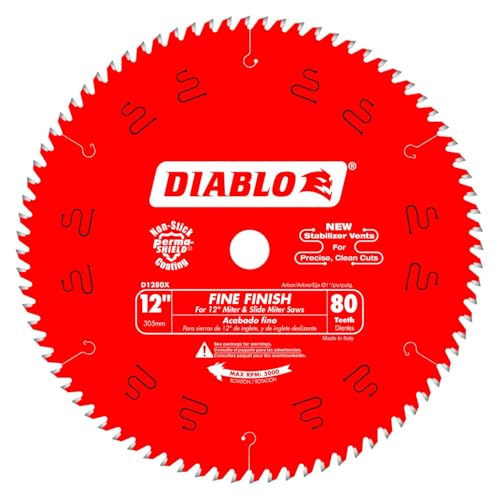
- Best for: Fine finish crosscuts on a 12-inch miter saw.
- 12-inch diameter with 80 Hi-ATB teeth
- 1-inch arbor
- Kerf of 0.118 inch
- TiCo Hi-Density carbide teeth

- Best for: Workshops that need one pack for rough cuts and finish cuts.
- 12-inch diameter blades
- 80-tooth and 32-tooth blades in one pack
- Tungsten carbide teeth
- 1-inch arbor

- Best for: Cutting metal and stainless steel with a standard circular saw.
- 7-1/4 inch diameter with 48 TCG teeth
- Cermet II carbide
- Triple chip grind
- Perma-Shield coating
All 3 Picks at a Glance
| Product | Specs | Action |
|---|---|---|
| Freud Diablo D1280X 12-Inch 80 Tooth ATB Crosscutting Saw Blade |
| Check price on Amazon |
| DEWALT DW3128P5 12-Inch Miter Saw Blade 2-Pack |
| Check price on Amazon |
| Diablo Steel Demon D0748CF 7-1/4 Inch 48 Teeth Saw Blade |
| Check price on Amazon |
Key takeaways
- Find the best Donovan saw replacement parts for your workshop. Compare blade sizes, tooth counts and carbide quality before you buy a new blade.
A dull blade turns a good saw into a frustrating tool. Cuts wander, edges splinter, and the motor strains on every pass. The real decision is not whether to buy a new blade but which one matches the saw on the bench, because diameter, arbor size, tooth count and tooth grind all change what a blade can cut and how clean the edge looks. Getting those details right costs less than a new saw and restores the cut quality the tool had when it was new.
This guide is for homeowners and workshop users who need a replacement blade for a circular saw or miter saw, including owners of older or less common saws such as Donovan models whose branded parts are hard to track down. Every blade below was picked from its Amazon product title and listed specifications, so you can compare diameter, tooth count and construction side by side and check the fit against your own saw before ordering.
Quick Picks
As an Amazon Associate we earn from qualifying purchases
| Product | Best for | Key spec from title |
|---|---|---|
| Freud Diablo D1280X 12-Inch 80 Tooth ATB Crosscutting Saw Blade | Fine finish crosscuts in wood | 12-inch, 80 tooth ATB, 1-inch arbor |
| DEWALT DW3128P5 12-Inch Miter Saw Blade 2-Pack | Rough cuts plus finish cuts in one pack | 12-inch, 80-tooth and 32-tooth, tungsten carbide |
| Diablo Steel Demon D0748CF 7-1/4 Inch 48 Teeth Saw Blade | Cutting metal and stainless steel | 7-1/4 inch, 48 TCG teeth, Cermet II |
How to Choose
Match Diameter and Arbor to Your Saw
A replacement blade only works when its diameter and arbor hole match the saw. Measure the blade already on the tool, then read the saw manual for the largest diameter it accepts and the arbor size it needs. A 12-inch blade belongs on a 12-inch miter saw, while a 7-1/4 inch blade belongs on a standard circular saw, and forcing the wrong size onto a saw creates a safety risk. Check the arbor too, because a blade with a 1-inch arbor will not seat correctly on a saw built for a smaller bore. Write both numbers down before you shop, and compare them against the product title rather than trusting a listing photo.
Pick Tooth Count for the Cut You Make Most
Tooth count decides whether a blade cuts fast or cuts clean. Blades with fewer teeth, such as a 32-tooth blade, remove material quickly and suit framing and rough crosscuts where speed matters more than surface quality. Blades with many teeth, such as an 80-tooth blade, take smaller bites and leave a smoother edge, which matters for trim, cabinetry and veneered panels. If most of your work is framing lumber, a low tooth count saves time. If most of your work is visible joinery, a high tooth count saves sanding. Buying the wrong count means either slow progress or rough edges.
Choose the Tooth Grind for Your Material
Tooth grind matters as much as tooth count. Alternate top bevel teeth shear wood fibres cleanly and suit crosscutting lumber, plywood and moulding. Triple chip grind teeth handle harder materials and hold up when cutting metal, laminate or non-ferrous stock. A blade ground for wood will dull quickly on steel, while a metal-cutting blade will cut wood slowly and leave a rough edge. Read the product title for the grind and the intended material, and match it to the material you cut most often. One blade rarely does every job well.
Weigh Carbide Quality and Pack Value
Carbide tips keep an edge longer than plain steel teeth, and the quality of that carbide decides how many cuts a blade survives before it needs sharpening. Look for named carbide grades and protective coatings in the product description, because coatings that resist heat and gum build-up keep the blade running cooler and cleaner. Also compare pack value: a two-pack that pairs a rough blade with a finish blade can cost less per blade than buying each one separately. Count how often you cut, then decide whether a single premium blade or a value pack fits your workshop better.
The 3 Best Options
Freud Diablo D1280X 12-Inch 80 Tooth ATB Crosscutting Saw Blade
- Best for: Fine finish crosscuts on a 12-inch miter saw.
- 12-inch diameter with 80 Hi-ATB teeth
- 1-inch arbor
- Kerf of 0.118 inch
- TiCo Hi-Density carbide teeth
Fine finish crosscuts on a 12-inch miter saw.
Confirm your saw accepts a 12-inch blade with a 1-inch arbor before ordering.
The Diablo D1280X is built for woodworkers who want a clean edge straight off the saw. Its 80 high alternate top bevel teeth slice through oak, pine, melamine, plywood and moulding with little tear-out, so trim and cabinet parts often need no extra sanding. Laser-cut stabilizer vents help the blade run true, and the Perma-Shield coating resists heat and gum build-up during long sessions. The thin kerf removes less material per cut, which keeps the motor load down on a 12-inch miter saw. For anyone finishing visible woodwork, this blade earns its place on the saw.
Watch out for: Confirm your saw accepts a 12-inch blade with a 1-inch arbor before ordering.
DEWALT DW3128P5 12-Inch Miter Saw Blade 2-Pack
- Best for: Workshops that need one pack for rough cuts and finish cuts.
- 12-inch diameter blades
- 80-tooth and 32-tooth blades in one pack
- Tungsten carbide teeth
- 1-inch arbor
Workshops that need one pack for rough cuts and finish cuts.
Both blades are 12-inch, so check your saw size first; the 32-tooth blade leaves a rougher edge than the 80-tooth one.
The DEWALT DW3128P5 two-pack covers both ends of a workshop job in a single purchase. One blade carries 80 tungsten carbide teeth for fine finish crosscuts, while the second carries 32 teeth for fast rough cutting, so you can switch blades instead of switching tools when the task changes. Both blades share a 12-inch diameter and a 1-inch arbor, which fits the common full-size miter saws found in home workshops. The thin kerf design cuts with less resistance, and the carbide tips hold an edge through repeated framing and trim sessions. It is a practical pairing for anyone who cuts both rough lumber and finished trim.
Watch out for: Both blades are 12-inch, so check your saw size first; the 32-tooth blade leaves a rougher edge than the 80-tooth one.
Diablo Steel Demon D0748CF 7-1/4 Inch 48 Teeth Saw Blade
- Best for: Cutting metal and stainless steel with a standard circular saw.
- 7-1/4 inch diameter with 48 TCG teeth
- Cermet II carbide
- Triple chip grind
- Perma-Shield coating
Cutting metal and stainless steel with a standard circular saw.
This is a metal-cutting blade, so it will cut wood slowly and roughly; also confirm availability at purchase, since one source notes the original D0748CF was discontinued by the manufacturer.
The Diablo Steel Demon D0748CF is the blade to reach for when the job involves metal rather than wood. Its 48 triple chip grind teeth use Cermet II carbide, a formulation made for cutting medium metal and stainless steel without the rapid dulling a wood blade suffers on steel. The 7-1/4 inch diameter fits standard circular saws, so it turns a common woodworking tool into a metal-cutting setup for brackets, conduit and sheet stock. A Perma-Shield coating protects the blade from heat and corrosion during metal cuts. For a workshop that occasionally cuts steel, this blade is far more useful than a second wood blade.
Watch out for: This is a metal-cutting blade, so it will cut wood slowly and roughly; also confirm availability at purchase, since one source notes the original D0748CF was discontinued by the manufacturer.
Which One Fits Your Situation
You Cut Trim and Cabinet Parts
Choose the Freud Diablo D1280X. Its 80 Hi-ATB teeth and stabilizer vents produce the smoothest edge of the three blades here, which matters when the cut surface stays visible on trim, cabinet doors and veneered panels. The thin kerf also keeps the saw motor working comfortably during repeated finish cuts.
You Want One Pack for Rough and Finish Work
Choose the DEWALT DW3128P5 two-pack. The 32-tooth blade handles framing and rough crosscuts quickly, and the 80-tooth blade takes over when the work needs a clean finish. Keeping both blades on hand means you stop swapping a single blade between jobs and start matching the blade to each cut. The shared 12-inch size also means both blades fit the same saw, so no extra tool is needed.
You Need to Cut Steel or Stainless
Choose the Diablo Steel Demon D0748CF. Its Cermet II triple chip grind teeth are made for metal, so the blade keeps cutting where a wood blade would dull in a few passes. The 7-1/4 inch size fits the circular saw most homeowners already own, which avoids buying a dedicated metal-cutting tool.
You Are Stocking Spares Before a Big Project
Choose the DEWALT DW3128P5 two-pack. Having a rough blade and a finish blade ready means a dull edge mid-project costs minutes rather than a trip to the store. Check the arbor and diameter against your saw manual first, then keep the spare blade in its sleeve until the current one loses its edge.
Common Mistakes
- Buying a blade by diameter alone and ignoring the arbor size, which leaves the blade unable to seat on the saw.
- Using a fine finish blade for framing, which wastes an expensive blade on rough cuts it was never meant to make.
- Cutting metal with a wood blade, which dulls the teeth quickly and can damage the workpiece.
- Skipping the saw manual and guessing the maximum blade diameter the tool accepts.
- Storing a spare blade loose in a drawer, where the carbide teeth chip against other tools.
Frequently Asked Questions
What size replacement blade does my saw need?
Check the blade already mounted on the saw and the saw manual. The manual lists the maximum blade diameter and the arbor size, and those two numbers decide which replacement fits. A 12-inch miter saw needs a 12-inch blade with the matching arbor, while a standard circular saw usually takes a 7-1/4 inch blade. Never force a blade of the wrong size onto a saw.
How many teeth should a replacement saw blade have?
It depends on the cut. Fewer teeth cut faster and suit framing and rough work, while more teeth cut slower and leave a smoother edge for trim and cabinetry. An 80-tooth blade is a good choice for visible finish cuts, and a 32-tooth blade suits rough crosscuts. Many workshops keep one of each so the blade always matches the task.
Can one blade cut both wood and metal?
A blade ground for wood dulls quickly on metal, and a blade ground for metal cuts wood slowly with a rough edge. The tooth grind and carbide formulation differ between the two jobs. If you cut both materials, keep a wood blade and a metal blade on hand and swap them as needed rather than expecting one blade to do everything.
How do I know a replacement blade is worn out?
Look for burning on the cut edge, tear-out that was not there before, and a saw that needs more pushing force to move through the material. Chipped or missing carbide teeth are a clear sign the blade should be retired. A dull blade also strains the motor, so replacing it promptly protects both the workpiece and the saw.