Key takeaways
- Find the best pumps for infinity pool circulation, with variable-speed models that keep the vanishing edge flowing smoothly while cutting energy use daily.
An infinity pool lives or dies on its pump. The vanishing edge — that sheet of water spilling over the raised wall into a catch basin below — only looks effortless when the pump delivers a steady, even flow across the full width of the edge, hour after hour. Too little flow and the edge goes dry in patches, breaking the illusion. Too much flow and the catch basin overflows, the surge tank runs dry, and the pump risks running without water. The best pumps for infinity pool systems are variable-speed circulation pumps sized to the pool’s volume and edge length, built to run long hours at low speed, and efficient enough that continuous operation does not become a burden.

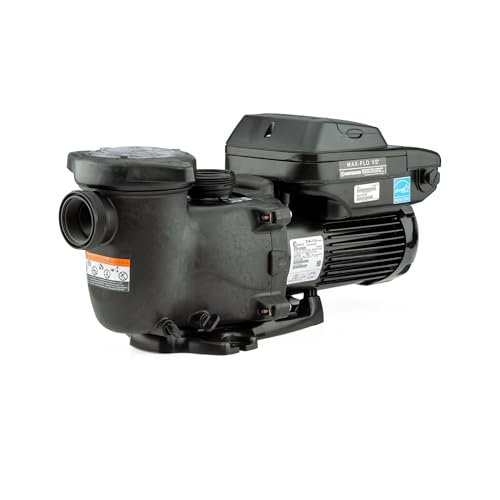
This guide covers variable-speed inground pool pumps suited to infinity-edge circulation. Both pumps below are established models from the two largest pool equipment makers, with permanent-magnet motors, programmable schedules, and the flow capacity to keep a vanishing edge fed. They are main circulation pumps, not booster pumps or cover pumps, and each one is discussed with its real strengths and its real limits, including the fact that one of them is a discontinued generation still sold through remaining stock.
Before buying, confirm the numbers with your pool builder or a qualified installer. Infinity pools need a pump matched to the edge length, the total dynamic head of the plumbing, the filter’s flow limit, and the surge tank capacity. A pump bought on horsepower alone is the most common sizing mistake in this category.
At a Glance
| Product | Best For | Key Spec |
|---|---|---|
| Pentair SuperFlo VS EC-342001 | Dual-voltage retrofit and flexible installation | 1.5 HP, 112 GPM max flow, 115/230V, 3 speeds |
| Hayward MaxFlo VS W3SP2303VSP | Small-to-medium pools and high efficiency | 1.65 THP, 230V, 600-3450 RPM, ENERGY STAR |
How to Choose the Best Pump for an Infinity Pool
Flow rate and edge length. The vanishing edge needs a continuous sheet of water, and the flow required rises with the length of the edge. A short edge on a small plunge pool needs far less water than a long edge on a large pool. Your pool builder can calculate the required gallons per minute from the edge length and the desired sheet thickness, but as a rule, the pump must deliver that flow at the system’s total dynamic head — the resistance created by pipes, the filter, the heater, and the height the water must be lifted. Check the pump’s performance curve at your system’s head, not the headline maximum flow, which is measured at zero resistance.
Variable speed is close to essential. An infinity pool runs its circulation far longer than a standard pool because the edge needs water whenever the pool is in use, and often while it is not. A single-speed pump running at full power all day wastes energy and wears quickly. A variable-speed pump can run at low speed for most of the day, providing steady filtration and a gentle edge flow, then ramp up for cleaning, heating, or spa operation. The savings come from the pump affinity laws: halving the speed cuts power demand dramatically, so long low-speed runs cost far less than short high-speed bursts.
Total dynamic head and plumbing. Infinity pools add head that standard pools do not have: the water must be lifted over the edge wall and the return path runs through the catch basin and surge tank. Long pipe runs, multiple water features, and a heater all add resistance. A pump that is perfect for a standard pool of the same volume may struggle on an infinity pool with high head. Match the pump to the head, confirm the port sizes against your plumbing, and check that the filter’s maximum flow rating is not exceeded at the pump’s top speed.
Voltage and electrical supply. Check what power is available at the equipment pad before ordering. Some variable-speed pumps accept both 115 and 230 volts, which simplifies a retrofit, while others need a dedicated 230-volt circuit. Pool pump installation is electrical work in a wet environment, and most jurisdictions expect a licensed electrician on the circuit. Confirm the voltage, the breaker size, and the bonding requirements with the installer rather than assuming the existing wiring will suit the new pump.
Surge tank and priming. An infinity pool’s catch basin feeds a surge tank, and the pump draws from that tank. If the tank runs low, the pump can lose prime and run dry, which damages the seal and the motor. A self-priming pump with a large strainer basket handles the debris that collects in a catch basin, and a pump that holds its prime reliably matters more on an infinity pool than on a standard pool. Keep the basket clean and the surge tank level correct, and the pump will last longer.
Efficiency ratings and rebates. Variable-speed pumps certified under the ENERGY STAR program carry a Weighted Energy Factor rating that lets you compare efficiency between models. A higher WEF means more water moved per unit of energy under the federal test procedure. Many utilities offer rebates for variable-speed pool pumps, and the certified list is usually the basis for eligibility, so check your utility’s program before buying.
Current versus discontinued models. Pool pump generations turn over, and older models can remain for sale long after the maker has moved on. A discontinued pump is not automatically a bad buy — remaining stock can be a good fit for an existing installation — but it can mean shorter support, fewer parts, and a different warranty path. Check the maker’s product page for the model’s status and named replacement before ordering, and ask the seller about warranty coverage for online purchases.
Pentair SuperFlo VS EC-342001
The Pentair SuperFlo VS is one of the most widely installed variable-speed pumps in residential pools, and its appeal for an infinity pool is flexibility. It runs on either 115 or 230 volts without rewiring, it offers three programmable speeds plus an override, and its footprint matches the classic SuperFlo and Hayward Super Pump layouts, so it drops into many existing equipment pads without replumbing.
ASIN: B00PKHX2BM
The headline specification is a 1.5 HP motor with a maximum flow rate of 112 gallons per minute, delivered by a totally enclosed fan-cooled motor that keeps dust and moisture out of the windings. The onboard digital display and real-time 24-hour clock make programming straightforward: set a low speed for all-day edge circulation and filtration, a medium speed for heating, and a high speed for cleaning, then let the schedule run. An RS-485 port allows connection to Pentair automation systems, which matters on an infinity pool where the pump, the edge, and the sanitizer need to work together.
Dual voltage is the feature that sets this pump apart for retrofits. Many older equipment pads only have 115-volt service, and most variable-speed pumps in this class demand 230 volts. The SuperFlo VS adapts to either, which can save the cost of running a new circuit. It is also described as a direct replacement for the Hayward Super Pump, widening the range of pads it fits.
There is an important status note. Pentair marks the SuperFlo VS generation discontinued and names the SuperFlo VST as its replacement. The pump is still sold new through remaining inventory, and it remains a sensible choice when it matches an existing installation or when its dual-voltage flexibility solves a wiring problem. For a brand-new infinity pool build, the current-generation replacement deserves a look first, since it carries the maker’s current support. Check the seller’s warranty terms for online purchases, since Pentair’s internet-purchase warranty terms differ from professional-installation terms.
For an infinity pool, the SuperFlo VS fits best on small to medium pools with a modest edge length, where its flow capacity covers the edge sheet with headroom left for the filter and heater. Its low-speed running is quiet, and its three-speed programming is simple enough that the schedule actually gets set and left alone.
Pros:
- Dual 115/230-volt operation suits retrofits without rewiring
- Three programmable speeds plus override, with a 24-hour clock
- Totally enclosed fan-cooled motor resists dust and moisture
- RS-485 port for Pentair automation systems
- Drop-in fit for common SuperFlo and Super Pump footprints
Cons:
- Pentair marks this generation discontinued; the SuperFlo VST is the named replacement
- Three preset speeds are less flexible than fully programmable rivals
- 1.5 HP may not cover long edges or high-head systems
- Warranty terms for online purchases are shorter than professional-installation terms
Hayward MaxFlo VS W3SP2303VSP
The Hayward MaxFlo VS is the efficiency pick of the pair. It is a 1.65 total-horsepower variable-speed pump built for small-to-medium inground pools, with a permanent-magnet, totally enclosed fan-cooled motor and an ENERGY STAR record that posts one of the strongest Weighted Energy Factor figures in its class. For an infinity pool that runs its circulation for long hours, that efficiency is the feature that pays every day.
ASIN: B07SV9C7M4
The pump runs at 230 volts and covers a speed range of 600 to 3,450 RPM, so it can idle along at very low speed for gentle edge flow and filtration, then ramp up when the pool needs full circulation. Its self-contained 24-hour clock supports up to eight custom speed and timer functions, giving more scheduling flexibility than a three-preset pump. The 1.5-inch by 2-inch unions match the plumbing on many modest residential systems, and the medium-head design suits pools where the edge lift and pipe runs are moderate rather than extreme.
Energy performance is where the MaxFlo VS earns its place. Its ENERGY STAR test record shows a Weighted Energy Factor around 10.2, which is a strong figure for a pump of this size, and the advantage grows on an infinity pool because the pump spends most of its life at low speed, where the efficiency gap over a single-speed pump is largest. The permanent-magnet motor is designed for quieter low-speed running, which matters when the equipment pad sits near an outdoor living area.
The limits are honest ones. At 1.65 total horsepower, this is a small-to-medium pool pump, and it will not carry a long vanishing edge or a high-head system with a large attached spa on its own. The 230-volt requirement means a suitable circuit must be available at the pad, and the W3 open-line model carries a shorter warranty than Hayward’s dealer-line pumps, with parts coverage around one year for online purchases. Buy from a seller Hayward authorizes for online sales so the warranty applies.
For an infinity pool, the MaxFlo VS fits best on a small to medium pool with a short to moderate edge, a straightforward plumbing layout, and a 230-volt supply — the setup where its efficiency advantage is largest and its capacity is enough.
Pros:
- Strong ENERGY STAR efficiency with a Weighted Energy Factor around 10.2
- Wide 600 to 3,450 RPM range for gentle edge flow and full circulation
- Up to eight programmable speed and timer functions
- Permanent-magnet TEFC motor for quiet, efficient low-speed running
- 1.5-inch by 2-inch unions fit common residential plumbing
Cons:
- 1.65 total horsepower will not carry long edges or high-head systems
- 230-volt supply required; no dual-voltage option on this model
- Shorter warranty on the W3 open-line model than on dealer-line pumps
- Buy from an authorized online seller to keep the warranty valid
Comparison: Which Pump Fits Your Infinity Pool
The choice between these two pumps comes down to your pad and your pool. The Pentair SuperFlo VS is the flexible retrofit: dual voltage, a familiar footprint, and simple three-speed programming make it the easier swap onto an existing pad, especially where only 115-volt service is available. Its flow capacity and 112-gallon-per-minute maximum suit small-to-medium infinity pools, and its automation port connects it to a wider Pentair system.
The Hayward MaxFlo VS is the efficiency choice for a new installation with 230-volt service. Its stronger Weighted Energy Factor and wider programmable range make it cheaper to run over the long hours an infinity edge demands, and its eight timer functions give finer control over the daily schedule. It is the better pick when the pool is small to medium, the plumbing is straightforward, and the running cost matters most.
Both pumps are variable-speed circulation pumps for inground pools, and both are sized for the same general class of pool. Neither is a heavy-duty pump for a long edge, a large attached spa, or a high-head system with multiple water features — those jobs need a larger pump, and your pool builder should size it from the edge length and the total dynamic head. Whichever of these two you choose, confirm the voltage at the pad, check the filter’s flow limit, and have a licensed electrician handle the circuit.
Frequently Asked Questions
What size pump does an infinity pool need?
It depends on the edge length, the total dynamic head of the plumbing, and the pool volume. The edge needs a continuous sheet of water, and the required flow rises with edge length. A pool builder calculates the flow from the edge length and the desired sheet thickness, then matches a pump whose performance curve delivers that flow at the system’s head. Horsepower alone does not answer the question.
Why is variable speed important for an infinity pool?
An infinity pool circulates water far longer than a standard pool because the edge needs flow whenever the pool is in use. A variable-speed pump can run at low speed for most of the day, keeping the edge fed and the water filtered, then ramp up only when cleaning or heating needs more flow. Long low-speed runs use far less energy than continuous full-speed operation.
Can I use a regular inground pool pump on an infinity pool?
A standard inground circulation pump can work if it is sized correctly for the edge and the head, and both pumps in this guide are inground circulation pumps. What matters is the match: the pump must deliver the edge flow at the system’s total dynamic head, the surge tank must stay full enough to hold prime, and the filter must handle the flow. An above-ground pump or a booster pump is not a substitute for the main circulation pump.
What is a surge tank, and why does it matter for the pump?
The water that spills over the vanishing edge collects in a catch basin and flows into a surge tank, which holds the extra water the edge needs. The pump draws from that tank. If the tank level drops too low, the pump can lose prime and run dry, which can damage the seal and motor. Keeping the tank level correct and the strainer basket clean protects the pump.
How do I keep the vanishing edge flowing evenly?
Even flow comes from the right pump size, a level edge wall, and a clean system. Check that the pump delivers the design flow at the system’s head, keep the strainer basket and filter clean so flow does not fall off, and keep the surge tank at its design level. If the edge goes dry in patches, the cause is usually low flow, a clogged basket, or a surge tank running low — not the edge itself.
Is the Pentair SuperFlo VS still a good buy if it is discontinued?
Pentair marks the SuperFlo VS generation discontinued and names the SuperFlo VST as its replacement, but the pump is still sold new through remaining inventory. It remains a reasonable choice when it matches an existing installation, when its dual-voltage flexibility solves a wiring problem, or when the price reflects its status. For a brand-new build, compare it with the current-generation replacement first and confirm the seller’s warranty terms before ordering.
Conclusion
The best pumps for infinity pool circulation are variable-speed inground pumps sized to the edge, not to a horsepower number. The Pentair SuperFlo VS brings dual-voltage flexibility and a simple retrofit footprint to small-to-medium infinity pools, with the honest caveat that it is a discontinued generation still sold from remaining stock. The Hayward MaxFlo VS brings stronger efficiency and finer scheduling to the same class of pool, provided a 230-volt supply is available. Either pump can keep a vanishing edge flowing smoothly — the right one is the one that matches your edge length, your head, your plumbing, and the power at your pad. Confirm those four numbers with your pool builder and a licensed electrician before ordering.
Disclosure: As an Amazon Associate, we earn from qualifying purchases.