Key takeaways
- Find the best large pond liners for big garden and koi ponds. Compare thick fish-safe EPDM sheets, liner sizing, and warranties before you buy one.
Introduction
A large pond is only as good as the liner underneath it. When you dig a wide basin, build a koi pond, or shape a stream that runs across the garden, the liner is the single layer that keeps the water where it belongs. A small sheet that works for a tub-sized water feature will not cover a large pond, and a thin liner that survives one season in a small pond can fail fast when it has to span a bigger area, hold more water, and sit under heavier rocks.


Large pond liners are sold as big pre-cut sheets or rolls, most often in EPDM rubber at 45 mil thickness. That thickness has become the standard for serious pond building because it balances flexibility, puncture resistance, and a long service life. The sheets in this guide all measure at least 15 feet on the short side, which suits ponds several feet deep with room for shelves, folds, and overlap at the edges.
How to Choose a Large Pond Liner
Begin with the size formula
The most common sizing mistake is buying a sheet that matches the pond surface and forgetting the depth and the edge overlap. The standard formula used by liner makers is simple:
- Liner length equals pond length plus twice the maximum depth plus about 2 feet for overlap.
- Liner width equals pond width plus twice the maximum depth plus about 2 feet for overlap.
Measure the maximum length and width at the widest points, including any shelves, plant ledges, or connected stream sections that the same sheet must cover. If the pond has an irregular outline, measure across the longest spans and treat the outline as a rectangle for sizing purposes.
Material matters more than brand
EPDM rubber is the material behind most of the liners in this guide. It is a synthetic rubber that stays flexible in cold weather, resists ultraviolet light and ozone, and conforms to curves, shelves, and corners without cracking. It is also fish safe and plant safe, which matters for any pond that will hold koi, goldfish, or water plants.
Thicker EPDM is generally tougher. A 45 mil sheet, about 1.14 mm thick, is the thickness most pond builders treat as the minimum for a large permanent pond. Thinner sheets cost less and weigh less, but they puncture more easily under rocks and roots, and they are harder to seam if you need to join two pieces. For a large pond, where a leak means draining hundreds of gallons to find the damage, the thicker sheet is the sensible baseline.
Fish safety is not optional
If the pond will hold fish, the liner must be fish safe. EPDM liners made for ponds are formulated without plasticizers that leach into the water, and the listings for the liners below state fish safety explicitly. Avoid repurposed roofing membranes or industrial liners that are not labelled for pond use, even if the material looks similar. A liner that is not made for aquatic life can harm fish and plants over time.
Think about the underlayment
A liner on its own is only half the system. Sharp stones, roots, and rough soil press against the underside of the liner, and over a large area the chance of a pressure point is high. A geotextile underlayment, laid under the liner, spreads the load and guards against punctures. Some liners are sold bundled with underlayment, and some are sold as the sheet alone. Either way, plan for underlayment as part of the build, not as an afterthought.
Weight and handling
Large liners are heavy. A 20 by 25 foot sheet of 45 mil EPDM weighs well over 100 pounds, and a 30 by 30 foot sheet weighs more again. Plan for at least two people to carry and position the sheet, and unroll it on a clean, flat area before moving it into the excavation. Warm weather makes EPDM more pliable and easier to work with, so a mild day is the best time to install.
Seams, patches, and repairs
A single seamless sheet is always preferable to joining two smaller sheets, which is another reason to buy the right size the first time. If a seam is unavoidable, use EPDM seam tape and primer made for pond liners, and follow the maker instructions exactly. Small punctures can be patched with a liner repair kit when the surface is clean and dry, so keep a patch kit on hand after the build.
Warranty and expected life
Makers of 45 mil EPDM liners commonly back their sheets with a 20 year limited manufacturer warranty, and some state a life expectancy of many decades. The warranty covers the material, not damage from sharp objects, poor installation, or animals, so read the terms on the listing before you buy. A long warranty is a useful signal of the maker’s confidence, but it does not replace careful installation and a good underlayment.
Top Picks
Firestone PondGard 45 Mil EPDM Pond Liner, 15 ft x 25 ft
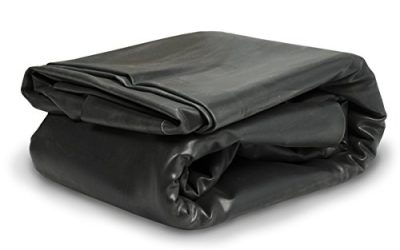
Firestone PondGard is the liner that many pond builders learned on, and it remains the reference point for 45 mil EPDM. This sheet measures 15 feet by 25 feet, a size that suits a large garden pond or a long stream and waterfall run. The material is 45 mil EPDM rubber, fish safe, and built to resist tearing and punctures while staying pliable enough to fold into shelves and curves.
The listing gives the item model number as FSPG15X25-45 and states a 20 year limited manufacturer warranty. The maker describes a life expectancy of 75 years for the material, which reflects how durable EPDM is when it is installed over a proper underlayment and kept out of direct contact with sharp objects.
This is a strong choice when you want a proven liner from a long-established maker and a sheet that is long enough for a narrow, deep pond or a pond with a connected stream. The 15 foot width covers a pond up to about 9 feet wide at 2 feet deep with overlap, and the 25 foot length gives generous room for a long basin. Because the sheet is a single piece of thick rubber, it is heavy to handle, so plan for help on installation day and lay it out in warm weather when the material is at its most flexible.### VEVOR 20 x 25 ft Pond Liner, 45 Mil EPDM
VEVOR makes this liner as a 20 by 25 foot sheet of 45 mil EPDM, one of the largest pre-cut sizes in this guide. The listing describes it as pliable and durable, made for fish and koi ponds, waterfalls, fountains, and water gardens, and notes that it can be cut to fit the shape of the pond. At 20 feet wide and 25 feet long, it covers a pond roughly 14 feet wide and 19 feet long at 2 feet deep with overlap, or a deeper pond with a smaller footprint.
The extra width is the main advantage here. A 20 foot wide sheet avoids the need to join two narrower sheets for a wide pond, and a single seamless piece removes a common source of leaks. The EPDM material is fish safe and flexible, and the black colour blends into the pond bed once gravel and rocks are placed over the edges.
Garvee 20 x 25 ft 45 Mil EPDM Pond Liner
Garvee lists a 20 by 25 foot sheet of 45 mil EPDM that is made for large outdoor ponds, waterfalls, koi ponds, and landscaping. The listing describes it as a durable, fish-safe rubber liner that is puncture resistant and UV proof, with a flexible, heavy-duty water barrier design. Like the VEVOR sheet above, it covers a wide pond in a single piece, which keeps the build simpler and removes seam work.
This is a practical pick when you want a large, thick, fish-safe sheet and the priority is coverage and durability rather than a particular brand name. Confirm the sheet size against your measurements using the length and width formula before ordering, and keep an underlayment under it, because even a puncture-resistant liner benefits from a protective layer over rough soil and roots.
LifeGuard 30 ft x 30 ft 45 Mil EPDM Pond Liner
LifeGuard, made by Anjon Manufacturing, makes this liner as a 30 by 30 foot sheet of 45 mil EPDM rubber, the largest sheet in this guide. The listing gives the item model number as LG30X30-45 and describes it as a liner for outdoor ponds, waterfalls, aquaponics, retention basins, and water gardens. A 900 square foot sheet covers a very large pond, a wide shallow wildlife pond, or a pond with a long connected stream, all in one seamless piece.
This liner suits the biggest builds in this guide, including large koi ponds and ponds where the shape is irregular and the extra material is needed to cover long spans. Because of the size and weight, plan the delivery and the installation carefully, clear a large flat area to unroll the sheet, and lay the underlayment first so the liner never touches bare rough ground.
Comparison Table
| Product | Key Feature | Best For |
|---|---|---|
| Firestone PondGard 45 Mil EPDM, 15 x 25 ft | 45 mil EPDM, fish safe, 20 year limited manufacturer warranty | Long ponds and stream runs from an established maker |
| VEVOR 20 x 25 ft Pond Liner, 45 Mil EPDM | 20 x 25 ft single sheet, 45 mil EPDM, cut to fit | Wide ponds covered by one seamless sheet |
| Garvee 20 x 25 ft 45 Mil EPDM Pond Liner | 45 mil EPDM, fish safe, puncture resistant, UV proof | Large koi and waterfall ponds |
| LifeGuard 30 x 30 ft 45 Mil EPDM Pond Liner | 30 x 30 ft single sheet, 45 mil EPDM, Anjon Manufacturing | Very large ponds and irregular shapes |
Buying Guide
Measure twice, then round up
Work out the liner size with the formula in the How to Choose section, then round up to the next available sheet. Extra material can be folded under the edge or trimmed, and it gives you room to fix a measurement error. A sheet that is too small is a costly mistake, because the only fix is a seam or a new liner.
Choose 45 mil EPDM for a permanent pond
For a large pond that you expect to last for years, 45 mil EPDM is the safe baseline. It resists punctures, handles temperature changes, stays flexible, and is fish safe. Thinner liners are lighter and easier to handle, but the saving is small compared with the cost of draining and relining a large pond after a puncture.
Decide between a pre-cut sheet and a roll
Pre-cut sheets, like the four in this guide, suit most garden ponds because the size is known in advance and the sheet arrives ready to unroll. Rolls suit very large or commercial installations where the pond is bigger than any pre-cut sheet, but they are heavier, harder to handle, and often need to be cut on site.
Budget for the full build, not just the liner
The liner is one part of the cost of a pond. Underlayment, a pump, filtration, rocks, edging, and plants all add up, and the liner is not the place to cut corners. A good underlayment protects the liner and extends its life, and it costs far less than a replacement liner and a rebuild.
Plan the installation day
Pick a mild, dry day, clear the excavation of sharp stones and roots, and lay a smooth base of sand or fine soil where needed. Lay the underlayment, then unroll the liner over it with help, centring it so the overlap is even on all sides. Fill the pond slowly, pausing to smooth folds and adjust the edges as the water weight settles the liner into the shape of the basin. Do not trim the excess until the pond is full and the liner has settled.
Check the listing details before ordering
Confirm the exact sheet size, the thickness, the material, and the model number on the product page before you order. Liners are sold in many sizes under similar names, and a single wrong digit in the size can mean a sheet that does not fit. Check the stated warranty terms as well, and keep the order details with your pond records.
Think about the pond edge
The edge of the pond is where many liner problems begin. Water can wick out over a low edge, and sunlight can degrade exposed liner at the waterline. Build the edge so the liner rises above the water level, tuck it under coping stones or edging, and cover the exposed band with rock or planting.
Frequently Asked Questions
What size liner do I need for a large pond?
Use the standard formula: liner length equals pond length plus twice the maximum depth plus about 2 feet for overlap, and liner width equals pond width plus twice the maximum depth plus about 2 feet for overlap. Measure the longest spans, including shelves and any connected stream, then round up to the next available sheet size. A sheet that is slightly too large is easy to manage; a sheet that is too small is not.
Is 45 mil EPDM thick enough for a large pond?
Yes, 45 mil EPDM is the thickness most pond builders treat as the standard for a large permanent pond. It is thick enough to resist punctures from normal rocks and roots when laid over an underlayment, flexible enough to fold into shelves and corners, and fish safe. Thicker material exists for commercial work, but 45 mil is the common choice for large garden and koi ponds.
Do I need an underlayment under a large pond liner?
An underlayment is strongly recommended for a large pond. It is a geotextile layer that sits between the soil and the liner, spreading the pressure and guarding against punctures from stones and roots. Some liners are sold bundled with underlayment, and some are sold alone. Either way, include it in the build, and clear sharp objects from the excavation first.
Conclusion
A large pond deserves a liner that is big enough, thick enough, and made for fish. A 45 mil EPDM sheet in the right size, laid over an underlayment and installed with care, will hold water for many years and give the pond a stable foundation. Measure with the sizing formula, round up rather than down, and choose a single seamless sheet whenever the pond size allows it.
The Firestone PondGard 15 by 25 foot sheet is the proven choice for long ponds and stream runs, the VEVOR and Garvee 20 by 25 foot sheets cover wide ponds in a single piece, and the LifeGuard 30 by 30 foot sheet handles the largest builds in this guide. Any of the four will serve a large pond well, so let your measurements decide.
Disclosure: As an Amazon Associate, we earn from qualifying purchases.